
..........................................................................................................................................................................................................
how did we not see this?
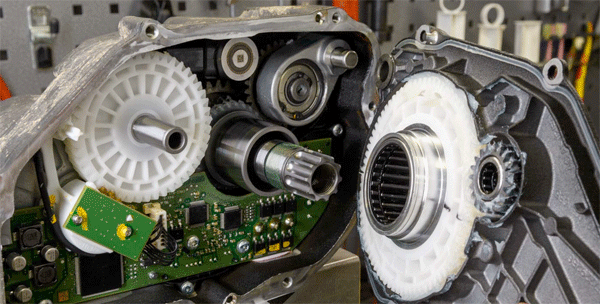
just possibly due to a better national state of mind, in the uk, e-bikes are still outsold by acoustic bikes by quite an impressive margin. but the bad news is that, not only are there between 50,000 and 60,000 sold each year, but according to cycle industry statistics, e-bikes are the number one driver of growth within that industry. already in the netherlands, e-bikes outsell acoustic bikes, a situation that first occurred in 2018 (excluding race and children's bikes), and bringing the average price of a bicycle to an impressive 1,207 euros.
since the netherlands was already a haven for cyclists, with more than one bicycle per head of population, that's quite impressive.
according to a spokesman for rai vereniging, an organisation representing the automotive and cycling sector, it is expected that, within the next three to five years, if not already, the e-bike will be ubiquitous in the netherlands to the point where the 'e' prefix will be abandoned when discussing bicycles. 60% of the population lives within 15km of their workplace, a distance considered to be perfect for e-bike use. cycling such a short distance in the netherlands is hardly worthy of mention, compared to the uk statistic of 72% of all car journeys persisting below 8km. that, however, is a discussion for another day.
as recently 'converted' drivers to electric cars discover that the range of these vehicles is rarely anywhere near the manufacturers' advertised figures, it's worth remembering that the electric car exists purely as a the result of an impending moratorium on the manufacture of petrol and diesel engines. in environmental terms, the electric car is seen as the first step in a transition away from the wholesale use of fossil fuels. of course, it will be some considerable time before the internal combustion engine is entirely replaced by more environmentally friendly means of propulsion, but unlike the e-bike, it is (allegedly) a solution to an existing problem.
if all of this seems glaringly obvious, allow me to quote the caption from a newspaper cartoon that was handed to me in debbie's yesterday by a friend of mine. the illustration simply depicted a bicycle with basket and rear pannier being pointed too by a man in the foreground, presumably intended to represent a cycle industry figure. underneath it said, "so we asked ourselves: how could we make the common bicycle heavier, more dangerous and, ultimately, reliant on electricity?". this was not a cartoon from a cycle-related publication but a daily newspaper, offering a perspective that the industry appears to have missed altogether.
acoustic bicycles were and are, 'greener' than their newer, electric counterparts. at the point of use, there is little to choose between them, but the latter, by its very nature, needs regular supplies of electricity to ensure it retains its popularity. if you've ever attempted to ride an e-bike with the motor switched off, you will know precisely of which i speak. and even if the electricity upon which it relies is classed as 'renewable', there is still a cost involved at both ends of the supply chain. and, to be honest, do you know whether the electricity you receive is from renewable sources? i certainly don't.
so what went so horribly wrong? i do understand that the existence of the e-bike has benefitted many who would otherwise be constrained to the car or walking, but if the e-bike is the principal driver of industry growth, then the elderly and disabled are certainly not the only ones buying them. i have highlighted on several occasions that the majority customer base of the two cycle hire outlets on islay, which predominantly hire the electric variety, is those young enough and fit enough to ride acoustic bikes.
so why does this bother me so much? it's true; as long as i don't have to ride or own one, why should i care what others do? after all, it's a free country. but the cartoon mentioned above is 100% right; the acoustic bicycle has existed for over 100 years, tautologically, having the benefit of over a century of technical development, making the currently available models lighter, stronger and more resilient to britain's disintegrating roads than ever. and i'm not simply talking about state-of-the-art carbon road bikes. having ridden an e-bike for several weeks for a washingmachinepost review a few years ago, there really was no energising feedback from the bicycle that might allow it to be favourably compared to the italian steel, sturmey three-speed, taurus corinto roadster which i still possess.
that particular bicycle, which many described as a 'proper' bike, also featured stirrup brakes, a brooks leather saddle and swept-back handlebars which insisted on a bolt-upright riding position. however, when the opportunity arose to inject a smidgeon of acceleration, i could still feel the frame reacting in a positive way. at the risk of paraphrasing flann o'brien's the third policeman, there was the start of my becoming part bicycle and the taurus becoming part human.
the e-bike, however, displayed none of those traits, to the extent that it was simpler just to ride everywhere at 25kph, preventing the motor cutting out when exceeding that speed. but in the process of doing so, i might as well have been riding a farm gate.
e-bikes might fulfil several specific functions, but the 'real' joy of cycling certainly isn't one of them.
image: cycling electric
sunday 30 november 2025
 ..........................................................................................................................................................................................................
bottling it
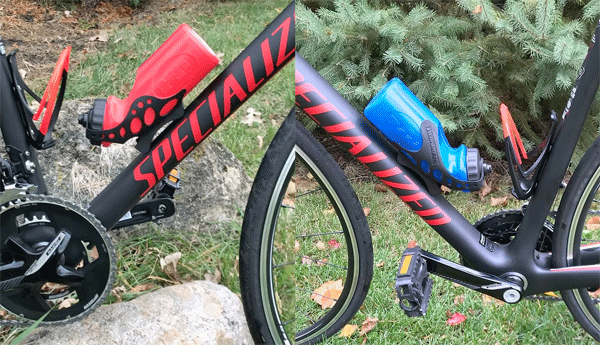
though the daily tour de france peloton is preceded by a phalanx of oddly shaped and decorated vehicles from which mostly useless tat is freely distributed to a captive audience, the holy grail, if that's not overstating matters just a smidgeon, was once to return home carrying a bottle discarded by one of the race's principal protagonists. no doubt there are many water bottles sitting in pride of place in french homes, their original possession ascribed to one of the race favourites, despite having been launched to the side of the road by a lowly domestique of that race favourite. for unless the recipient failed to check each stage report and claim the bottle belonged to a rider who abandoned the race during a previous stage, who's to know?
unfortunately (if you're a cycling fan) for the eagerly awaiting, in 2015, the tour stages and all other events with designated feed zones, now feature several waste zones, where bottles can be legally discarded without the possibility of a swiss-franc fine on crossing the finish line. of course, that hasn't entirely removed the chance of acquiring a sponsor-decorated bidon elsewhere on the parcours; it is still possible to witness riders specifically targeting fans at the roadside, throwing bottles nearby to allow them subsequent bragging rights. it would be hard for the commissaires to issue a fine, when the bottle was removed from the roadside with great alacrity.
it has been estimated that a team of eight riders might use up to 7,500 bottles for those three weeks in july, only a portion of which will still be in their possession when the champs elysees stage comes to an end. however, if even a portion of the bottles discarded are nabbed by race fans, it should be quite easy to apportion their disappearance to the marketing budget without embarrasment.
the bottles themselves, though offering one or two variations depending on the manufacturer, are of a more or less standard form-factor. while we have the option of acquiring the 750ml variant, from cursory observation, the professionals seem to have largely settled upon the 500ml bidon. and quite rightly so, for the larger bottles would make it a tad more difficult for the hapless domestique sent back to the team car mid-stage, when trying to stuff them in every available space on a team jersey. this problem has doubtless been exacerbated by the fact that many riders seem to have adopted skinsuits in place of jersey and bibshorts.
but the very existence not only of team cars, but frequently, well-supplied motorbikes which follow the breakaways, means that a couple of 500ml bottles offers the maximum weight saving over the larger version, adjudged to be more than adequate for even the warmest of stages. the standard bottle design and form factor has existed for many a long year, though there have been occasions (campagnolo, hold your hand up) when reputedly more aerodynamic versions have been seen atop the down tube, though often of a proprietary shape that discouraged screen-printed branding by the team sponsor. that could be the primary reason for their quick disappearance from professionals' bicycles. it is surely ironic that the so-called aero bottles had gone the way of the dodo before the cycle industry became fixated on aero as a priority for its bicycle designs.
however, no matter what has been tried-and-tested since time began, evolving to the point of ubiquity and with no demonstrable need for improvement, somebody will always figure there's a better way to do it; the classic solution looking for a problem. in the case of the bidon, a company by the name of tazi, responsible for providing pillow supports and neoprene breathable face-masks (nope, me neither), has brought to market what they refer to as the ultimate hydration bottle which would appear to be placed in its cage with the top pointing downwards, "designed both to optimize aerodynamics and ease of access for cyclists seeking performance gains."
to bolster the apparent need for just such a bottle, tazi says, "the system supports high-speed airflow zones and maintains performance across yaw angles, offering measurable time savings for competitive cyclists. The aerodynamic profile is optimized for frontal airflow and sidewind deflection." yet despite the above claim that this oddly shaped bottle offers 'measurable time savings', i could find nothing on their website that backs this up with definable evidence. perhaps we're just supposed to take their word for it. however, the fact that someone has even suggested making the humble bidon part of a bicycle's coefficiency of aerodynamics, shouldn't really be much of a surprise.
the bicycle's headtube, stem and headset have already been mildly re-engineered to allow integration of the cables into the frame, thus removing them from the airflow, though my cynicism sees that having far more to do with aesthetics than with any real aero advantage, particularly for you and i. and since any water bottle is bordered on both sides by thrashing legs, and sheltered from head-on interaction with the airflow by the downtube and headtube, any perceived aerodynamic benefit must surely be minimal at best?
and apropos of nothing in particular, when clicking the buy now button on the tazi website, it appears that sales are via an etsy shop on which the sales statistics indicate that, in the space of five years, they have made 106 sales (though the majority of comments seem to have been made by those who purchased the neoprene safety/athletic face mask, an item which is conspicuous by its absence from the etsy shop.
it's a funny old world.
saturday 29 november 2025
..........................................................................................................................................................................................................work ethic

yesterday afternoon's conversation strayed onto the logic behind smoking cigarettes; or rather, the lack of. though it could be classified as a sub-genre, those who smoke what i believe are referred to as 'roll-ups', frequently spend an inordinate amount of effort on making these look as close as visually possible to the manufactured item, spreading the tobacco evenly across the paper, prior to rolling it as tightly and smoothly as possible. but, having created this mini-sculpture, they then set fire to it. were you to exit the corner shop or local averagemarket, withdraw a twenty-pound note from an inner pocket and set fire to that, you'd be locked up, healthier than the average smoker, but restrained from the society in which you live.
i make the assumption here that the majority currently reading, as velocipedinal aficionados, are non-smokers. hopefully the few who indulge will take note of the ludicrousness of their situation.
it's hard to decide to where blame might be apportioned; it is in the interests of the cigarette manufacturers, cigarette paper purveyors and the tobacco industry, to encourage as many as possible to smoke their wares. and it is surely testimony to the stupidity of many that they not only continue to do so, but that the market continues to acquire new customers despite forcible warnings printed on the packets, the alarming retail cost of each and a complete ban on the advertising and display of the myriad brands. were i keen to join the happy throng (a guaranteed indicator that the place down below had frozen over), i would have no idea what to ask the girl behind the cigarette, vape and off-licence counter.
it is, however, hardly news that the world is a bizarre place in which to live these days. despite general contentedness that the cycle-to-work initiative survived intact in ms reeves' budget announced on wednesday, it's entirely unclear whether it truly has made any difference to britain's transportational habits. though there were fears, originally voiced in a financial times article, that "high earners[were buying] £4,000 e-bikes for weekend rides in the surrey hills", allegedly the evidence does not confirm that supposition. despite the original £1,000 price cap being lifted in 2019, there were fears that something similar would be re-introduced to to weed out abuses of the system.
personally, i know of three individuals who happily took advantage of the scheme, not to purchase high-end bicycles, but relatively economic choices, none of which they ever had any intention of using to ride to work. one of the above bought a mountain bike for travel to work, a distance of considerably less than one kilometre, but left it to rust in the garden, while driving such an appallingly short distance by car. parallels with setting fire to cylinders of paper and tobacco spring to mind (a habit in which they also frequently indulged).
local, independent bike shops were/are presumably very much in favour of the cycle to work scheme, aiding and abetting sales which, like the newspaper industry, would appear to be in decline. but cursory research would tend to suggest that it is the larger bike chains which benefit most from the scheme. you and i, far more aware of the existence of local bike shops, would anecdotally seem to be in the minority; we already own bicycles, and quite likely the high-end models that reputedly formed the bulk of cycle-to-work acquisitions. but the proletariat (no disrespect intended) are far more likely to have heard of evans cycles or halfords, as, perhaps, has the wages department of their employers.
and while we're on the subject of halfords, the high street retailer has recently announced a 9% increase in cycle sales, almost half of which were realised through their auto centres, a perceived contradictory state of affairs. but that announcement, if nothing else, highlights the conviction that, for the corporate world, bicycles are seen far more as a commodity than a means of transport. parallells with the tobacco industry continue, however, where cigarettes are merely a source of profit, apparently divorced from their negative health effects. though it may seem overly critical, bicycles, for halfords, evans cycles and others, are not always stocked and sold on the basis of their transportational benefits, but as a means of adding nine percent to the bottom line.
"while the operating environment remains unpredictable, our combination of needs-based products and services, as well as market leading positions, give us the confidence that we will continue to grow our business in line with our plans." no doubt entirely true, but do you detect any enthusiasm for actually riding a bicycle in that statement?
well...?
friday 28 november 2025
..........................................................................................................................................................................................................that could never happen
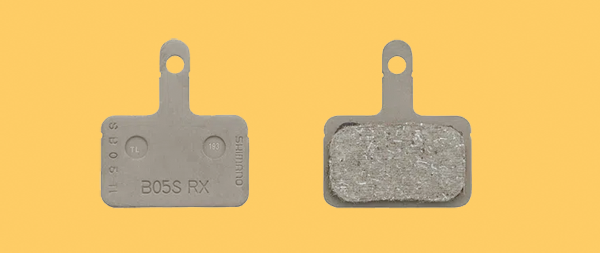
while perusing youtube the other evening in the search for a particular max roach drum solo, i came across a video by scottish car clans, highlighting a new found problem in the world of the automobile. the presenter held up a brake disc pad as illustration of what he described as a relatively simple maintenance task that could be carried out by any car owner with a modest degree of mechanical knowledge. according to the gent, on a car with a regular handbrake, it was but a simple matter of pushing the rear brake pistons back into their slots, and the pad would more or less fall into their hands.
however, those vehicles with electronic, push-button handbrakes, required what he described as a scanner, an electronic tool that allowed the home mechanic to have car's electrics retract the pistons, thus freeing up the disc pads. so far, so good.
but a recent case across the pond concerned a 2025 electric car, sporting a push-button handbrake. the owner, keen to undertake the necessary maintenance, acquired one of the aforementioned scanners, but one which failed to work. on the understanding that such tools occasionally malfunction, he was able to borrow another which also failed to carry out the necessary. so he contacted the manufacturer.
it transpires that the siutuation he experienced was entirely deliberate, curated in the interests of safety. the customer service department informed him that he could purchase one of the specific tools offered by the brand at a cost of £2,000, pay a monthly subscription of about £90 and would require an internet connection in order to simply change the brake pads on a vehicle of which he was the owner. as mentioned above, this particular case originated in north america, but the majority of the vehicles under question are, as the presenter noted, the result of global production; it would scarcely make sense to make cars with different attributes for specific countries (other than left or right hand drive). therefore, he saw little preventing the same scenario taking place in the uk.
with contemporary bicycles attracting more and more in the way of electronics, who doesn't foresee a time when the home bicycle mechanic might need to follow in the footsteps of the motorist? there is an admittedly far less expensive precedent in campagnolo's chain tool, to which i have failed to find a noticeably cheaper alternative. but with derailleurs now festooned with servo motors and attendant batteries, how long before these require an appropriately proprietary tool to place them in an inert state to allow removal of the chain? while the motor manufacturer cited safety reasons as the reason for charging for a specifc tool and a subscription to reset the software, there's no denying that doing so could also be seen as a potential money-earner. just think how much a garage will charge for the relatively simple task of replacing brake disc pads, a home task that has been carried out in driveways across the world for decades.
if this seems somewhat far-fetched, take note: at one time, it was possible to replace individual sprockets on the freewheel/cassette. derailleurs could, at one time, be completely dismantled for cleaning or refurbishment. and some sram owners will already have discovered that, when the inner ring wears out, both have to be replaced because the rings are now manufactured in one-piece. installing technology on a bicycle that is no longer user serviceable is not something that only happened yesterday.
and there's plenty of room to make things considerably worse.
thursday 27 november 2025
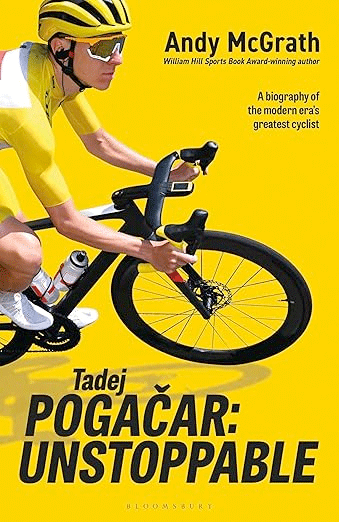
..........................................................................................................................................................................................................tadej pogacar: unstoppable. a biography of the modern era's greatest cyclist. andy mcgrath. bloomsbury sport hardback. 264pp illus. £20
perhaps one of the most devious, yet possibly fun thing to do, would surely be to take to the stage at the uk drum show and ask the assembled multitudes who is the best drummer in the world? though he died in 1987, i'm willing to bet there would be many of my own age, who claim the crown belongs to buddy rich, with a studied minority rooting for gene krupa. in more recent terms there would be a sizeable number who cannot see past neil peart, the deceased percussionist for canadian rock trio, rush. geddy lee and alex lifeson, the two remaining members of rush have elected to reform, making the surprising choice of german, anika nilles as peart's replacement. that single act has set tongues wagging as to the logic of that particular choice. but amongst contemporary drummers, opinion will likely vary between dennis chambers, thomas lang, virgil donati and a string of others; the list goes on.
the problem, however, is not with the drummers themselves, but the rationale behind the question, one which is entirely subjective. personally, i'm completely behind voting for jay bellerose, or perhaps bill bruford, or maybe joe farnsworth. you can see the potential (or actual) dilemma. depending on what style of music happens to be the force majeur du jour, will greatly influence who i think is the best on any given day. and i am no different to every other drumming fan (apart from those obsessed with neil peart). the more astute amongst you will already be raising your hands, eager for me to have you point out that my original question is completely subjective.
looked at objectively, we're all correct while being simultaneously wrong. as with many who practise the various arts, there is no agreed set of parameters by which we might gauge the best drummer, guitarist, visual artist, film maker, website designer; i could go on. however, when we turn our gaze to sports, there is an almost foolproof means of deciding on who is the best. it's a method used to figure out which team is heading any particular league, who wins gold, silver or bronze, and which team or country has garnered more medals than their competitors. it's precisely why i fail to comprehend how skateboarding and ice-dancing are incorporated into the olympics.
so while 'who is the best? is a permanently flawed question, who won last year's tour de france has only one right answer. therefore, when author andy mcgrath alludes to tadej pogacar as 'the era's greatest cyclist', there really is no counter argument worth breeching.
declaring potential misgivings right from the start could be seen as hedging his bets, but mcgrath makes it clear in the introduction, "pogacar and his inner circle declined to be interviewed for this book." something that must surely have harshed the author's buzz. granted, there are many details that can (and are) gleaned from a wide variety of sources, but throughout the book, we never really learn of tadej's own reactions to his apparently stellar career. yes, there are training camp and post stage interviews, but many of these, as we are well aware, are stage managed by the uae team emirates media team. a cycle team representing not only one of the world's major airlines, but a middle-east country over which many have expressed doubts about its human rights record.
for those of us harbouring an unhealthy obsession with the bicycles involved in the world tour, there's precious little in the book's 260 plus pages about his bicycle sponsor, colnago (this is not a criticism; simply an observation). and then there's the ever present shadow of the world's previous greatest cyclist, eddy merckx. and that's where the objectivity might appear to fall apart. pogacar's palmares of professional victories, at the end of 2025,(according to the back of this book) stood at 50, whereas eddy merckx retired having stood atop the victor's podium 525 times. the slovenian is 27 years old, six years younger than eddy was when he retired. pogacar's average number of wins per year is seven, so if he maintains that statistic and retires at the same age (currently looking quite likely, according to the latter chapters of the book), he will leave the peloton with fewer than 100 victories.
however, the author has had the good sense to categorise pogacar as the best of his generation. "it's obvious that he is now above me" merckx told l'equipe after the 2024 world championships. [...] curiously, the next day, merckx recanted that opinion, "suggesting pogacar still had some way to go." it's a discussion that will probably continue for decades to come, but as andy mcgrath points out, comparing the cannibal and his modern successor is a fun and frivolous exercise."
and then then there's the spectre that will not go away. the last time one rider demonstrated a similar level of untouchability, his seven tour de france victories were declared null and void, for reasons of which we are all well aware. but, as a quote from one of tadej's peers demonstrates, "i don't know if i believe it or not. i think its too difficult to do any kind of serious doping or anything like that [...] let's face it, if he was doing something, there'd be other guys that would be as good. [...] but actually, nobody (else) is that good."
it is odd that pogacar declined to collaborate on the book, given that he is portrayed throughout as a happy go lucky chap, whose not so secret weapon is his ability to enjoy his cycling. however, a lack of co-operation need not be seen as an insurmountable obstacle to the completion of a successful biography. after all, andy mcgrath's previous outing was his superb biography of tommy simpson, a rider who was long gone before fingers reached a keyboard. however, it may have given the book a tad more substance, given that there's not too much more than an accurate and frequently insightful recount of his racing career to date.
personally, i find its publication to err on the side of too soon, though i can understand why the author and publisher have chosen to do so. "pogacar expressed a couple of times during the 2025 season that he is at his peak. [...] if i burn out, i can finish and be happy with what i achieved." his agent has apparently made it clear tha pogacar "intends to honour his contract [...] which runs until the end of 2030." no doubt there will be a second book at the start of next decade.
meantime, this is a worthwhile publication; well researched, notwithstanding pogacar's non-compliance, and written in a style that makes for an easy read. it would have been made even better had the illustrations not been confined to mono images on the opening page of each chapter. i'd have expected, at the very least, a centre section of colour images from tadej's career to date, but instead there is a selection of unattributed and uncaptioned colour images repeated across front and rear endpapers. the bibliography and references are, however, more than comprehensive (though you might need a magnifying glass to read some of them).
perhaps jonas would be a worthy and willing collaborator for mcgrath's insightful word processor?
wednesday 26 november 2025
..........................................................................................................................................................................................................the missing links
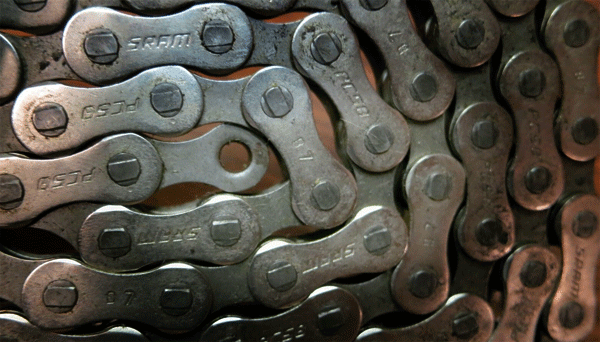
i am fervently hoping that the electronic revolution does not proceed apace, remaindering all that goes before it, and leaving the hapless cyclist with no option but to answer gary numan's question of 1979. both shimano and sram have blatantly put out their top level wares for examination, the results of which show a wholesale infestation of electrons, campagnolo too are loathe to be left behind, having recently surprised all by providing three iterations of their 13-speed wireless super-record groupset, one which has received many plaudits (some almost grudgingly) from those sufficiently well-placed to have tried it at first hand.
vicenza, however, has kept one foot firmly in the mechanical space, not only happy to provide record and chorus with levers instead of buttons, but also make space for rim brakes too, even though the majority of frames currently on offer, have nowhere to put them. campagnolo, we salute you. just at this moment in time, i am comforted that i and many others, continue to have access to componentry still actuated by bits of wire, though given the nature of the cycle industry, i do harbour fears that those options could just as easily disappear overnight.
were i a wealthy man, i would probably stockpile a few calipers and derailleurs in my nuclear shelter, 'just in case'. but given that we're currently looking at little short of £500, that's a sum i'd prefer not to have to spend at all, let alone on the basis that i 'might' need them between now and armaggedon.
yet, though i am happy to identify as a luddite, full of righteous disdain for the velocipedinal malaise of the 21st century, well do i know that electronics, by and large, do pretty much what its says on the tin. i have ridden examples of all three manufacturers' wares, though all of which were from the pre-wireless days, so i may not be quite as well appraised as those who rightly question my motives. however, luddidity aside, from a purely pragmatic and economic point of view, i remain to be convinced that there is any marginal gains to be achieved by spending at least twice as much money simply to change gear and be able to stop on a sixpence.
there is no point in my denying that hydraulic disc-brakes are eminently more powerful than a set of dual-pivot rim-brake calipers, and as far as mountain biking, gravel biking and cyclocross are concerned that additional stopping power might well come in quite handy at times. but for the vast majority of roadies, rarely are we required to come to an immediate and complete stop; mostly, we use our brakes to scrub off a bit of speed, a task that rim-brakes have efficiently achieved for over a century. and as to gear changing, i do not recall ever arriving back at the croft, even after the lengthy ride of the falling rain, so close to exhaustion from changing gear, that i have scarce had the strength to place the ritchey in the bike shed.
i'm not denying that electric gears work precisely the way you'd expect them to, i'm simply declaring that i can't actually see the point. more especially because of the premium price attached.
and it would appear that the addition of electrons to the riding process is not necessarily incident free. during several cyclocross events from the current season, and most certainly from last year's, i, and many others in the real and tv audience, have witnessed riders having to give the rear derailleur a hefty 'nudge' as a result of a falling over incident, placing the component in 'safe-mode', to use the appropriate computer parlance. according to shimano's instructions, the rider ought to 'hold the button on the junction box (or handlebar switch) for about five seconds until the light flashes, then spin the cranks so the derailleur can automatically shift through its gears'
while that's presumably a great deal less troublesome than a damaged mech that subsequently refuses to carry out its given purpose, it mostly seems that riders thus affected still find it prudent to pay a visit to the pits for a change of bicycle.
however, casual observation of this year's x2o badkamers, exact, super-prestige and world cup races has given rise to the possibility that there are more dropped chains occuring than was once the case. granted, i have not been taking notes throughout my many years of watching cyclocross, so it could be that dropped chains are a regular and unavoidable part of cyclocross racing. that, i don't doubt, given the terrain over which the above trofee series take place, but my contention is that these malfeasances are on the increase. and, that being the case, does this imply that electrons have a mischievous side?
tuesday 25 november 2025
..........................................................................................................................................................................................................