
..........................................................................................................................................................................................................
steamrollered

i'm sure the majority of us own bicycles that emit clicks, clunks, bangs or a combination of the above, the source of which can rarely be discovered. my cyclocross bike has been guilty of doing so for a month or two, though a noise particularly difficult to diagnose because there is no regularity to its emissions. i'm inclined to think the sound arises from the freehub, though acoustic transmission often suggests the crank may be responsible. either way, there's no play in the bottom bracket, the bearings of which were replaced but a year past. it is a sporadic irritation which could, ultimately, be the result of the unseasonably warm weather to which we have been recently and currently subjected.
however, on the basis that it could emanate from the freehub, i removed the rear wheel over the weekend, and took off the cassette, in order to spray a liberal does of wd40 where i thought it might prove effective. but, while the wheel was in the prone position, i noticed a small hole beginning to appear in the sidewall of the challenge chicane tyre; of insufficient dimension to be of great concern, but on the basis that the tread itself has begun to smooth, it was a tyre i harboured intentions of replacing sooner rather than later.
the chicane tyres fulfil the uci maximum dimension of 33mm for competition use; though i have no intentions of ever competing in a cyclocross event, i still prefer to adhere to such a dimension for reasons of tradition and because it straddles the fine line between rolling resistance and tenacious grip. my memory tends to be less capable nowadays than was once the case, so i seized the moment after refitting the rear wheel to place an order for just such a tyre, in the hope that it might arrive prior to my bike ride with markus stitz next saturday afternoon.
fingers crossed.
on the table beside my armchair lies a challenge tyres sale leaflet (don't ask) showing tyres included within the various categories to which they cater: road, cyclocross and gravel. the chicane tyre is quite clearly shown under cyclocross and available in 33cm width. however, there is a gravel grinder tyre with a remarkably similar tread, available in 33, 36 and 40mm widths shown under the gravel heading. however, my retailer of choice showed the challenge chicane 33mm as a gravel tyre, despite the tyre company's own specific categorisation. given my recent articles, particularly that of two days' past, you can imagine my level of irritation, despite clicking the add to basket button (the price was highly favourable).
so now i wonder whether the retailer classified the tyre under the gravel heading in order to improve its sales potential? after all, specialized has already re-classified the crux as both a gravel machine (the cyclocross definition has been completely removed), now sold with a far larger set of sprockets than would be required for competitive cyclocross, and sporting a set of 47mm tyres. in the days when i reviewed bicycles, i recall one prominent distributor explaining that they kept no cyclocross review models, as sales figures simply didn't justify doing so. i am given to believe they now keep one of each of the gravel machines that supplanted the 'cross bikes, despite little by way of difference.
so, does this mean that, despite cyclocross continuing as a highly popular branch of the sport, though admittedly not overly so on this side of the channel, it will soon become marginalised in favour of gravel? it will come as little surprise that i seriously considered e-mailing the retailer to point out the error of their ways, but we both know that so doing would be the very definition of a pointless exercise.
but come the revolution...
monday 25 august 2025
 ..........................................................................................................................................................................................................
the fourth dimension
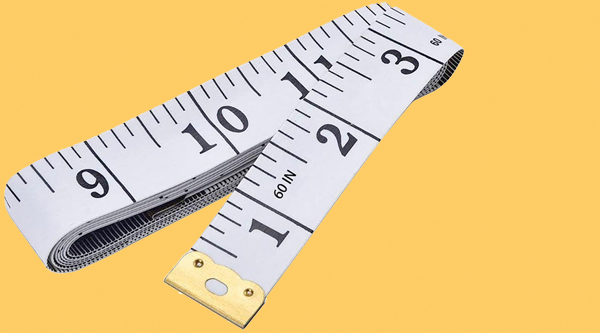
bicycles of all genres are defined by a wide range of measurements governing their very existence. approach your bespoke frame-builder of choice and, aside from earnestly enquiring as to the type of cycling in which you intend to indulge, they will unquestionably require several measurements to aid the build process. it's unlikely that any will be specifically interested in the off-the-peg frame that resides in the bike shed, for that particular measurement seems almost as irrelevant as asking tadej's gear choice for the ventoux.
in the uk at least, bicycle frames were traditionally measured in inches, reputedly the distance between the centre of the bottom bracket to the top of the top tube, except for those who measured to the centre of the top tube. the trick was always in asking which option your desired frame utilised. however, the encroachment of the metric system pretty much dictates that all road bikes, at least, are now measured in centimetres. but even that is hardly the final endpoint, particularly following the advent of the mountain bike, on which the bottom bracket was designed to be higher from the ground in order to offer suitable clearance above the undergrowth. similarly, cyclocross and gravel bikes. though i once varied not one iota from a 54cm frame, the nice folks at ibis cycles were astute enough to realise that a 53cm frame was the optimum when sending their hakkalugi 'cross bike for review.
but life only becomes more complex on learning that not all frames featuring the same height, adhere to any rules when it comes to top tube length. if having a frame built specifically for you, that can be defined at the outset, but if switching from one brand to another, rarely is there a guarantee of any uniformity in such measurement. nor, come to that, is there any specificity regarding stem length or height angle. confused? unfortunate, because i've scarcely begun.
for instance, where do we begin when it comes to wheels? in the halcyon days of yore, a british road bike was formed to accommodate 27" wheels, but a general lack of availability elsehwere in the world, combined with the manufacture of the majority in the far east, pretty much led to the adoption of the now ubiquitous 700c wheel, the number ostensibly referring to the diameter of the rim. however, the actual diameter is only 622 millimetres; 700c was/is a historical french apellation relating to the approximate outer diameter of a road bike wheel. and far from britain's original 27" wheel, the 700c, which is actually 622c, equates to 24.5inches, though its outer diameter is closer to 27.5" or 29", which is why the mountain bike 29er comfortably accepts a tyre designed for 700c road wheels, because they both share the 622mm bead diameter.
good grief charlie brown.
yet despite the imposition of the metric system for frame and componentry measurements, for reasons understood by no-one, bicycle gearing is still measured in inches. you will, however, be saddened to learn that the gear inches expressed to help make a choice of chainring size and cassette configuration has, in fact, no relation to inches whatsoever. should you have a 53 tooth chainring up front, matched to a 32 tooth sprocket at the rear, that would provide you with approximately a 46-inch gear. in order to achieve that figure, i divide the 53 by 32 and multiply it by my wheel diameter, which, despite actually being 24.5, or 27.5 or possibly 29, is usually standardised as 27", even though that's not strictly correct and seemingly excludes the actual outer diameter of the tyre. in other words, largely meaningless. however, the formula is intrinsically useful because, irrespective of its ignorance of reality, if applied uniformly, it offers a constant method of comparison.
however, if you think one pedal revolution of your 53x32 gear will move you forward by 46 inches, you may be somewhat disillusioned.
but this is now the modern world, where few carbon frames adhere to more traditional lines; in many cases the top tube is no longer parallel to the ground, but slopes downward from the head tube towards the juncture with the seat tube. in effect, this should mean that frame measurements adhering to the formula of botton bracket centre to top tube centre (or top tube top) would be rather meaningless, offering no real indication of the overall size of the frame. so the manufacturers have implemented an escape clause, by defining the measurement as to the centre of the top tube, were it still to have been horizontal. but even that doesn't really help, because not only do some frames feature a seat tube that extends a few centimetres above where a horizontal top tube might have joined, but others feature a so-called seat-mast, often placing severe restrictions on how low you might adjust the saddle height.
i was once sent a bicycle for review, the measurements of which reputedly met with my expectations, only to discover on its arrival, that it bore just such a seat mast, and i was unable to lower the saddle to a comfortable height. perhaps if all manufacturers standardised on centre of bottom bracket to top of seat tube (being the lowest point to which the saddle could be set), the angle at which the top tube was set would be of little concern?
the bicycle: an enigma wrapped inside a mass of contradictions.
sunday 24 august 2025
..........................................................................................................................................................................................................yes or no?

about 1.5km from bruichladdich village, the road begins to become a bit twisty, creating several blind corners on a two-lane road, but lanes that are perhaps not as wide as similarly constituted roads on the mainland. along with the rest of the hebrides, the island has a reputation for being somewhat relaxed in its approach to life, though whether that's actually true or not, depends greatly on whom you ask. perhaps, on the basis that much of the population lives here all year round, with only the occasional trip to scotland for shopping, we are inured to the lifestyle, thinking it not to be materially different from that of the rest of the nation. it's mostly visitors who describe the place as relaxed and friendly, but that's probably because they're on holiday, with little need to achieve anything within a given time frame, other than ensure they arrive in time for a whisky tour.
however, i harbour a sneaking suspicion that the permeation of a relaxed demeanour is often more virtual than real, if the actions of many visiting motorists are to be explained. indeed, islay is more of a state of mind than a destination, as espoused by a range of fridge magnets, but that's a state of mind you accumulate after years of living here, and not something immediately realised when visiting for a week or a few days.
yet, already i fear i have digressed; i was talking about the twisty-turny approach to bruichladdich village, a stretch of road that persists with this persona, even if leaving the village and heading towards bridgend. in either direction, there's little doubt that the cyclist is the weakest link, unable to ride at a speed that would keep him or her ahead of following, motorised traffic. along a series of blind corners, that places the cyclist in a predicament not entirely of their own making. on the stretch of road under discussion, the sea borders one side, while a small verge bordered by walls, fences or buildings features on the opposite side. either way, there is no real opportunity for cyclists to get out of the way and let following traffic pass. should motor traffic heading in the opposite direction be the wrong side of persistent, there is potential for a vehicle to be stuck behind the bicycle for about a kilometre and a half.
for local and visiting motorists, that appears to bear a close resemblance to purgatory, often leading to more than one attempt to pass; unfavourable to either motorist or cyclist.
ever helpful, several members of the velo club are in the habit of waving through following motor traffic when the road ahead is demonstrably clear. many motorists will welcome the opportunity to move through, though not all signal such satisfaction. others, perhaps understandably, are inclined to distrust the proffered signal and remain in situ, probably beginning to froth at the mouth before one kilometre has passed. but, while attempting to show courtesy to our fellow road users, what if we ought not to indulge in the practice?
i have been advised on at least two occasions, that should my 'drive through' signal be in error and subsequently result in a collision, it's possible that i might be held culpable (i should mention that this is unverified). in which case, is it time to capitulate and simply pay attention to my own interests? oddly, given that many modern-day cars are advertised on the basis of their acceleration proclivities, frequently there is a lengthy delay in many of those vehicles making their overtaking manoeuvres, by which time, oncoming traffic may have appeared over a hiddent summit or blind corner. in order to forestall such iniquity, i and my colleagues generally try to ensure we can see the road to be clear quite some distance ahead.
on single track roads, the entire scenario is considerably different. there is not a singletrack on islay where it is safe for a following car to overtake a cyclist, though that salient fact has not stopped many attempts so to do. for one thing, the grass verges are bordered by often deep ditches; move too far to one side in an attempt to overtake a cyclist or cyclists, and it's very likely it will end in tears. however, given our predilection for courtesy, we will usually dip into a passing-place as soon as possible. in the case of oncoming traffic, you'd like to think that whomsoever reaches a passing place first would give way. but nine times out of ten, that doesn't happen; in the minds of many a motorist, cyclists are of secondary importance and should always give way to cars. on the grounds of self-preservation, it's a great deal safer to acquiesce.
however, my quandary remains: should i wave through following traffic when or if safe to do so, or just mind my own business and try to ignore the increasingly revved engine behind? seemingly, 'islay, and it's goodbye to care' doesn't always apply.
saturday 23 august 2025
..........................................................................................................................................................................................................gravelling
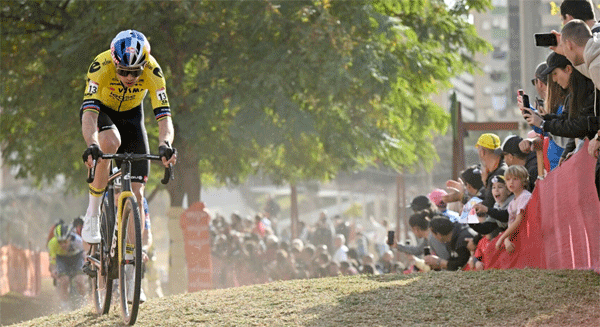
i have, over the years, made my opinions quite clear regarding the current gravel fad, though in fairness, my reservations have a great deal more to do with the cyclocross/gravel controversy, almost entirely of my own making. for those new to the subject, it is my contention that the gravel bike was invented to salve the reputation of north america in not having invented cyclocross in the first place. on being asked by a friend riding his new gravel bike as to the difference between a 'cross bike and a gravel bike, my response firmly made it clear that there is no appreciable difference whatsoever. but what might be more pertinent, is the fact that, aside from drop handlebars, it's increasingly likely that there is little observable difference between gravel and xc mountain bikes, now that the former seems close to inheriting suspension forks.
but my disparagement of the genre has nothing to do with those who wish to consider themselves gravellists; in keeping with my long-term strategies, as long as there are bums on saddles, i care not one whit for the style of bicycle to which those saddles are attached. however, i do find myself expressing concern over the sheep-like behaviour displayed by the industry, especially in those cases where it has simply re-purposed items and apparel originally designed for mtb, and attempted to revive sales by appending the word gravel to the naming process. can anyone actually explain the difference between footwear designed for mountain bikers and that aimed squarely at the gravellist? should the uci not be sanctioning those who dress for one, yet ride the other?
the long-established rough stuff fellowship has been travelling the less pristine corners of the universe on bicycles originally built for daily use, bereft of clearance for 50mm + sized tyres, single chainrings and hydraulic brakes, since 1955. cyclocross was well established by that point, when gravel was simply a substrate featured in driveways. i do realise that contemporary society clamours for something new, even if new actually means something that already exists, but simply painted a different colour. how much cheaper it would have been to organise a cohesive marketing campaign that pushed the cyclocross meme to the peletonese.
however, despite these frequent dissensions from something i am powerless to alter, gravel is, for the time being, here to stay, and cyclocross will continue to exist as a superior sport, content to remain self-satisfied in the background, despite gravel's fearsome ubiquity.
yet, the gravel machine continues unabated, smugly re-inventing the wheel, intent on teaching its granny to suck eggs. i state the latter based upon the missive recently received from fast talk laboratories. according to their website, they "...question everything—and deliver answers you can put to work, now. So you can spend less time on trial and error, and more time on top of your own personal podium." their latest podcast, brought to you by reputed experts, promises to "...dive into the chaos, excitement, and evolution of the sport in 2025." so far, so good, but later in the description designed to entice me to listen to the highlighted podcast, i am informed that "Coach Ryan Kohler shares a go-to workout designed to build the durability needed to hold steady power deep into long events."
in the days when i frequently reviewed training manuals designed to cover the latter subject, i was given to understand that such information was already well distributed amongst the cognoscenti. narrative from fast talk laboratories would tend to suggest that they consider gravel riding ripe for reprise, as if it was bike riding of an entirely different order. which, of course, it plainly isn't. "Gravel racing is about more than fitness, it's about skill, strategy, and preparation", the inference being that other forms of cycle sport aren't. who amongst us has not marvelled at the bike-handling skills of wout van aert, mathieu van der poel and tom pidcock? and where did they acquire such skills? published in 2007, cyclocross: training and technique by simon burney would appear to pre-date fast talk's advice by almost 20 years, as indeed does the complete book of cyclocross, skill training and racing by scott mares, which dates from 2008.
at the time of writing, both are still available on amazon.
once again, i greatly appreciate the number of cyclists who have acceded to the gravel steamroller and purchased gravel bikes, a number amongst which is the mighty dave-t. he has retired his focus carbon road bike in favour of the gravel bike he acquired earlier this year. but let's not pretend that gravel is something new, a genre of cycling that requires the great, the good and the industry to point out just how awesome it all is, brainwashing us into thinking it needs a skillset hitherto unknown to sunday bike riders all across the nation.
that, i believe, really is artificial intelligence.
photo: visma lease-a-bike
friday 22 august 2025
..........................................................................................................................................................................................................new bike day
apparently, and unbeknownst to me, it appears that wednesday 20 august was new bike day if my e-mail inbox was anything to go by. not even midway through the day, colnago announced the unveiling of the c68 rossa, a smartly red decorated carbon bicycle which is (every day's a schoolday) positioned as the official bike of this year's vuelta, a bestowance that is every bit as pointless as a penguin on a bike. only 90 of these will ever exist, though at £19,900 each, you'd have to be a real enthusiast for both spain and colnago to hand over the readies. however, it didn't stop there; ever since they introduced their wireless 13-speed groupset, campagnolo have been drip-feeding individual bicycles, built-up with their shiny new gears and brakes. perhaps fortunately, there appears to have been no price tag attached to this week's bicycle (drali).
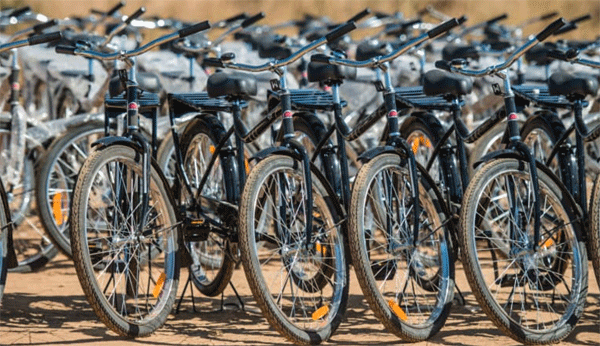
however, as the result of an entirely different trajectory, a further e-mail detailed a bicycle that pretty much sits at the exact opposite end of the spectrum to either of the two detailed above, but in truth, a bicycle that carries a far higher degree of importance than the flimsy carbon fibre that attracts such inflated prices. in fact, this particular example of velocipedinal delight costs a mere £120 and is currently available in a limited edition of 906,000. we're talking about world bicycle relief's buffalo bike, a sturdy machine that has made such a huge difference to thousands of african lives.
world bicycle relief won a eurobike award last year for the second iteration of their buffalo bike, the utility s2, a variation which now features two chains, two sprockets on the back wheel and a simple back-pedalling movement to switch between the two. this allows the rider to cope with the less than pristine terrain across which the majority of these bikes are ridden. and while colnago trumpets the c68 rossa as being very much of the 21st century, i asked wbr development and engagement manager, thomas richards, when and where the first buffalo bike was made? is it also of the 21st century?
"The first Buffalo Bicycles were produced shortly after World Bicycle Relief was founded in 2005, but in 2010, the design was updated and unified into a single, gender-neutral frame, created in collaboration with Giant Bicycles, to improve accessibility and durability. Today, the Utility S1 continues to be produced at scale, remaining the backbone of WBR's bicycle programs with the utility S2 being introduced to our programme countries this year."
without wishing to harp on about the wide differences between world tour carbon and the sturdiness espoused by a bicycle named after the animal whose strength it closely resembles, the buffalo is designed to withstand the slings and arrows of african discontent. but was it, in fact, designed to equal the terrain by virtue of its impressive sturdiness, or was there careful research undertaken to identify the ultimate bicycle for the task?
"The Buffalo was never just a matter of finding a sturdy off-the-shelf option. From the beginning, WBR undertook years of research and development, testing bicycles in rural Africa, gathering rider feedback, and refining the design to meet the realities of everyday use. The result is a purpose-built bicycle, designed specifically to survive punishing terrain, carry loads of over 100 kilograms, and remain serviceable with the most basic of tools. Unlike commuter or leisure bikes adapted for other markets, the Buffalo was engineered from the ground up to meet the specific challenges faced by people in rural communities."
as thomas alluded to above, the original bicycle, the utility s1 is not only still in production, but forms the 'backbone' of wbr's donation programme. however, if the latter has proved its worth and longevity in the face of the contemporary frippery enjoyed by you and i, what brought the need for a second version?
"The Utility S2 represents both a natural evolution of the S1 and a strategic response to the needs of riders in different terrains. Many users expressed the need for gears to help when carrying heavy loads, tackling hilly routes, or navigating busier roads. In response, WBR engineers developed a patented two-speed drivetrain that is simple, durable, and redundant, with two chains so that the bike can still be ridden even if one fails. This system makes climbing easier, reduces strain when starting under load, and improves control on loose or uneven ground, making it more versatile for a wide range of conditions."
if you've cast even a cursory glance at the world bicycle relief website, you'll surely have seen what passes for road infrastructure in certain parts of deepest africa. while we live in a society where over 70% of all car journeys are of less than five miles, those in such regions have a far stronger work ethic and survival instinct, coupled with the glaringly obvious fact that driving a car (let alone owning one), is simply not an option. in western commerce, there's a strong likelihood that the emergence of a new bike would immediately supplant its predecessor. so why the two versions?
"The S2 is not a replacement for the original S1. The single-speed S1 continues to be the primary model in production for 2025-2026, and it remains well-suited to the conditions in many of WBR's program areas. Both versions are available, and the decision on which to supply is made by country teams, based on local terrain, the target population, and sector priorities. Over time, if demand for the S2 grows significantly, some regions may choose to transition fully to the new model, but this will be a market-driven decision rather than a top-down replacement."
all well and good and, if i might point out, quite logical. but to look a tad more closely, how does wbr decide which of the two is the more appropriate choice?
"The choice between the S1 and S2 is determined by practical factors. The S2 tends to be favoured in areas with hilly terrain, where riders often carry heavy cargo, or where additional gearing can reduce strain for older riders. The S1, however, remains the simpler and more cost-effective option, requiring less maintenance and performing well in flat regions. Ultimately, country teams evaluate local needs and decide which model best serves the communities they support, with the S1 continuing as the default option unless the S2 offers clear advantages."
release of a new bicycle targeted at you and i, is almost certain to contain as many new features as possible, whether those features have any intrinsic value or not; an attempt to convince that we're receiving value for money. it's a state of affairs that is endemic in modern, western society, where reputedly at the behest of customer demand, spurious new features are included in software, white goods, mobile phones and even foodstuffs, even if the previous version was perfectly adequate. the software i use for my daily work now includes the ability to engage with artificial intelligence, even though i never asked for it, and have ignored every opportunity for its use. it seems prudent, therefore, to ask if the utility s2 has proved every bit as good as hoped for?
"Early results show that the Utility S2 has been highly effective. It has already won international recognition, including Eurobike and German Design Awards, for its innovative and robust design. Field testing confirms that the second gear provides real benefits for riders, particularly when hauling heavy loads or climbing hills, and the redundant drivetrain ensures the bike maintains Buffalo's reputation for reliability in harsh conditions. Monitoring and evaluation are ongoing through data collected via Buffalo Shops and programme integration, and WBR is continuing to study the long-term impact of the S2 throughout this year, with results to be shared in the future."
molds for carbon monocoque frames are expensive, probably ensuring that, once created, variations are likely kept to an absolute minimum. unless, of course, market research indicates otherwise. thomas has indicated that the utility s2 is currently undergoing monitoring and evaluation, which might indicate that, far from being set in stone, the buffalo s2 is under constant revision.
"The design of the Buffalo Bicycle is indeed under constant development and is far from fixed. Every generation of the bike has been refined based on rider feedback, mechanic reports, and field testing. WBR's product development team, which includes some of the most experienced minds in the cycling industry, works continuously to improve the bicycle so that it best serves the needs of its riders. The move to a single universal frame in 2010 and the introduction of the S2 drivetrain are both examples of this ongoing evolution. WBR is committed to continuing this process, ensuring that the Buffalo Bicycle remains a reliable and indispensable tool for the communities that depend on it."
while you've been reading the above, i have employed my calculator to work out that for the price of one colnago c68 rosso, world bicycle relief could provide almost 166 buffalo s2 utility bikes to those considerably less fortunate than ourselves. if colnago sell all 90 of them, they'd earn sufficient cash to provide 14,920. might i humbly suggest that, if you have the ready cash to purchase one colnago c68 rosso, that you instead click the link below and donate the money to world bicycle relief? and even if you're a long way from acquiring cambiago's finest, please donate whatever you can.
the world will be eternally grateful.
donate to world bicycle relief
thursday 21 august 2025
..........................................................................................................................................................................................................the left hand of the electron

the uk media has, for several years been criticised for the negative way in which they often categorise people on bicycles. this can best be demonstrated by the case in which a teenager stole a bicycle from outside a shop and while making his getaway, knocked down and injured and elderly woman walking on the pavement. most of the subsequent headlines bore a great deal of similarity to 'teenage cyclist injures pensioner'. if you don't see anything wrong with that paraphrased heading, then perhaps your definition of the word 'cyclist' is a tad different than is mine.
though i'd agree there is lingusitic room to manoeuvre, i generally think of a cyclist as someone who regularly rides their bicycle, either for sport, leisure or commuting; someone who prefers to arrive in the saddle than in the driver's seat. someone who nicked a bicycle and simply made use of it as a getaway vehicle, does not, in my world, equate to a cyclist. but in terms of public perception, it constitutes a decrease in the number of brownie points applicable to cyclists. that, in case you've lost the thread, is you and me. similarly the contention that all cyclists are on drugs, making no dispensation towards those of us who have demonstrated no requirement for an illegal competitive edge.
the insinuation is the same as that of those who accuse all cyclists, in the generic sense, of showing a predilection for jumping red lights. if only to undermine the latter contention, i feel i should point out that neither islay or jura feature any traffic lights whatsoever. the velo club is completely innocent of all charges. so, no matter what your career path or occupation, if you ride a bicycle on a regular basis, to joe public, you are subsumed by the title cyclist. i feel it's worth pointing out that, to date, there seem to have been no attempts to delineate the genre of cycling to which the accused appears to favour.
for instance, i have yet to come across any bold statement by the press specifically accusing gravel bikers to be responsible for dropping gel wrappers on a local bridle path. that, however, may be about to change, but for the life of me, i cannot quite fathom why.
two recently reported incidents, sadly included the unfortunate death of an 81 year-old man in argyll & bute, a region in which yours truly resides. the headline on the bbc's website ran 'electric bike rider, 81, killed in crash with van'. intriguingly, the fact that he was aboard an e-bike appears to be unrelated to the incident. in mitigation, however, the police report identified the other vehicle as a grey ford transit van though that descriptive information was not, you will note, included in the headline. nor was its means of power.
also from the bbc, 'e-bike rider critically injured in crash with car'. though the car involved in the collision was named as a dacia logan you will note that the headline did not state 'e-bike rider critically injured in crash with petrol-driven car'. so, taking our minimal sample of two, we can divine that the bbc and other media outlets, find the notion of an e-bike to be more important than the motive force of either of the other vehicles involved in each incident. what would have been the difference had the headlines said '81 year-old cyclist killed in crash with van', or 'bike rider critically injured in crash with car'. in other words, why is the fact that both were aboard bicycles powered by batteries of specific note in either case?
of course, perhaps i'm just being too sensitive, particularly since i'm not noted for favouring e-bikes in the first place? but as the e-bike gathers pace in the nation's transport strategy, is this something of which we should expect more? or will the balance of the universe be satisfied by future reports of vehicle collisions where the motive power of those involved is suitably highlighted? or perhaps i have completely misunderstood the entire scenario, and the emphasis on the electric nature of the bicycles is intended to elicit greater sympathy for the riders?
it's a funny old world.
wednesday 20 august 2025
..........................................................................................................................................................................................................what's afoot?

it's not so many years ago since the hot topic of conversation was the length of socks worn by the sport's top professionals. traditionally, if you cast a cursory glance at images of fausto, eddy or gino, you will learn that those fine gents were in the habit of wearing very minimalist ankle socks (in the case of gino bartali, i found more than a few images where he appeared not to be wearing any socks at all). one can only surmise that socks were of purely utilitarian function in those halcyon days of yore, shielding champion feet from any errant rubbing from leather shoes encased in regulation toe-clips. in truth, cycling apparel in the 40s, 50s and sixties fulfilled an almost entirely different function than it professes to do so today.
let's face it, when one-piece skinsuits are reputedly more aerodynamic than naked skin, there's more at stake than simply covering one's modesty. woollen jerseys combined with, at one time, woollen shorts, may well be one of the most aerodynamic drag-ridden coverings ever invented, but at the time, that was of little concern, notwithstanding the fact that the technology to produce high performance fabrics simply didn't exist. cycle-racing in the time of anquetil, simpson and poulidor was, as the cliché goes, mano e mano, riding effectively the same lugged steel bicycles in time-trials, mountain and sprint stages. this is not a case of yours truly having donned rose-tinted spectacles, but a simple statement of fact.
any attempt to get one over on the competition was more likely to consist of holes drilled in every shiny alloy component up to the point where structural failure seemed imminent, all as a result of technological limitations that affected apparel every bit as much as it did frame construction and componentry design. yet, despite the dramatic changes that have affected cycle-sport in the past two decades, it would be a brave man or woman who claimed that cycle-racing has become more exciting in the process. if you are inclined to doubt this statement, conduct a quick search on youtube for a video entitled 'the greatest show on earth' featuring eddy merckx in the 1974 giro d'italia. as a confirmed luddite, i have watched the aforementioned several times, and try as i might, i cannot find this year's event to have been any more exciting than that of 1974.
in a classic case of the tail wagging the dog, contemporary cycle technology has been bestowed upon us by the manufacturers. granted, it's a singular, and perhaps mistaken point of view, but i have my doubts that hydraulic discs and electronic groupsets were realised to satisfy demands from the professionals. though tadej and jonas are ultimately tasked with evaluating, respectively, the latest from colnago and cervelo, it seems a tad unlikely that they are the originators of the reputed developments; they are simply the beneficiaries. but let's face it, their very particular demands are a far cry from our own. as i mentioned very recently, i could purchase a tadej replica colnago y1rs and remain every bit as tardy as i am at present.
the difference? marketing.
in the days of steel frames, each was custom built for their respective riders, entirely dependent on the requirements of each. the construction and economics of carbon fibre manufacture essentially dictates that the bicycles designed for mathieu and wout are largely surplus to requirements for you and i. however, whether you agree or otherwise is largely academic; cycle-racing, as robert millar/pippa york once said, is all about entertainment, and though speeds have increased dramatically across the 21st century, i'm happy to go on record as saying that the excitement and entertainment value is no better (though probably no worse) than it was in 1974. that it is comparatively more expensive nowadays is probably inarguable.
but, prior to my lengthy and digressive monologue, we were discussing socks and the lengths to which riders will now go (see what i did there?) to incorporate this functional item of apparel into their aero strategy. style, i would argue, is very much in the eye of the beholder, but i would take some degree of issue with the contention that south-african based sox footwear, recently adopted for the uk market by bob elliot agencies fits into the category of 'stylish'. this particular manufacturer additionally contends that their socks are performance-based, a contention i admit, with which i am in no position to disagree.
you can, however, judge for yourselves from the image atop this feature.
it's a worry.
tuesday 19 august 2025
..........................................................................................................................................................................................................