
..........................................................................................................................................................................................................
recruitment

according to the mighty dave-t, the velo club rule book consists of only two rules. rule #1 states, there are no rules, while the second rule implies see rule #1. though such a state of affairs suits those of us who have been in the peloton for more than just a few years, the chances are, it also suits any apprentices who may opt to join riders who, in most cases, are old enough to be their dads.
every year there are written words and youtube videos promising to explain the nooks and crannies of the tour de france, explanations that are obviously applicable to pretty much any other bicycle race, but take advantage of le tour's higher profile. for instance, whomsoever wins stage one immediately dons the race's first yellow jersey, leading many civilians to then ask why the winner of stage two doesn't do likewise? and how come the four hapless individuals seen in the lead at the beginning of the edited highlights are nowhere to be seen come the final kilometres? and how come everything is in kilometres instead of miles? as those who have been involved for many a long year will know well, there are a hundred questions like these, asked every year.
of course, the majority of the above questions pertain solely to the competitive milieu, and are surplus to requirements when it comes to the sunday ride. but there are aspects of cycling that need to be learned, quite often the hard way. for instance, even if there's only two of you riding into a headwind, taking turns at the front can make life a great deal less fractious; somebody needs to teach that. then there are velominati's rules, the majority of which are tongue in cheek, though many adopt them as if they were mandatory. again, someone needs to point out the wheat from the chaff.
add all those together, along with the inescapable fact that cycling can often be physically hard, and maybe the sad fact that few recruits seem to present themselves at the start line on sunday morning, has more to do with cycling and its practitioners than we'd care to admit. for instance, as was more likely the case in the past, having a newbie arrive on the best bike they can afford, only to be dropped unceremoniously within a few kilometres (miles?), is hardly the way to encourage velocipedinal interest. for instance, anyone's first football match can be far less intimidating, where it's eminently possible to simply run up and down the field watching what goes on and learning in the process. if you've been dropped on the first hill, it's a lot harder to figure out.
and then there's the big problem of gears; which one should you be in and when? i cannot be the only rider to note that learning riders, despite owning bicycles with eleven gears, seem to ride in only one, and inevitably the wrong one. i have seen way too many slogging up an incline with the chain in the big ring and the small sprocket. it's a gear choice that often seems to persist throughout the ride. i and others have helpfully pointed out the options and which combination of gears would make life easier, yet a matter of minutes later, the chain is back in the big ring and small sprocket. i often wonder if shimano, campagnolo and sram are wasting a large proportion of their research and development expenditure by concentrating on wireless technology, when a seeming majority of recent converts use virtually none of it. maybe di2 is not the revelation it is made out to be?
many other aspects of the sporting life seem to recruit new adherents without too much fuss, yet, on islay at least, the number of apprentices who have joined the happy throng in recent years could be counted on less than the fingers of one hand. yet, ostensibly, the two finest activities for physical improvement are swimming and cycling, predominantly on the basis that both bear your weight while exercise takes place. and both can be undertaken solo, or in groups, suiting both personality types. yet islay's junior swimmers are far more numerous than its cyclists.
of course, it's easy to take a more elitist point of view, convincing ourselves that it's only the hard men (or women) who are capable of riding almost 70km or more each day of each weekend, and there may be a certain amount of truth in that contention. but it's worth remembering that swimming requires only that you possess a swimming costume; cycling can be one heck of a lot more expensive. even a very basic road bike costs probably in excess of £300, to say nothing of suitable clothing for the job. and what if, after a couple of rides, you don't like it? that doesn't explain, however, why 29 juniors have joined the golf club on islay this year. that ca be every bit as expensive as cycling.
maybe cycling has a problem it hasn't thought of?
monday 7 july 2025
 ..........................................................................................................................................................................................................
the silent approach
you will, i'd imagine, be less than surprised to learn that i'm not a great fan of formula one motor racing, though to be honest the much publicised fia changes to their rules have a tendency to make the uci look like mere amateurs. firstly, i cannot quite fathom the point; many years ago, motor racing at this level, was promoted as being the ultimate in research and development, with innovations subsequently cascading to the ordinary family car. however, given that the latter, nowadays, is more likely to be of the electric variety, in that respect, formula one has no direct relevance. and given the dramatic disparity in size, design and cost between the car driven by lewis hamilton and my next door neighbour, comparisons are very hard to visualise.
perhaps a family of four driving a byd electric saloon car round silverstone this weekend would teach a great deal more than a 200mph+ missile that needs to change its tyres when it rains.
but then there's the whole point of the alleged sport. i don't doubt that the drivers have to be particularly fit to withstand the forces exacted on their bodies during the average grand prix, and there's no denying that it takes a certain skill and nerve to drive at top speed. but a great deal seems to depend on the car, its engine and the team's budget; find yourself at the poorer end of the racing spectrum, and you could be a great driver and still start from the back of the grid. in motor racing, money talks, and it talks a lot louder than it does in world tour cycling, where salaries for the top riders are but a tenth of the money paid to top grand prix drivers. and though there have been many asking whether cycling has become too expensive recently, the cost of tadej's colnago or jonas' cervelo would scarcely buy a wheelnut for a formula one car.
in yesterday's guardian newspaper, ahead of this weekend's british grand prix at silverstone, most of the first page of the sports section was given over to the gossip surrounding red bull driver, max verstappen, and mercedes driver, george russell. it appears there are strong rumours that the former is about to be replaced by the latter; and of course, nobody's saying for sure. russell maintains that he "won't be going anywhere", while verstappen opted not to make any specific comment, but stopped short of denying that talks had taken place. for those of you interested in such goings on, max verstappen currently sits third in the drivers' championship, nine points ahead of russell, but both well behind the two mclaren drivers who, so far, have shown everyone a clean pair of heels.
verstappen, as the highest paid formula one driver, is reckoned to earn just shy of £48 million, while the man he might potentially replace at mercedes is close to the poverty line at only £11 million. with two dozen races this year, verstappen is picking up £2 million per race. meanwhile, back in our world, tadej pogacar is reckoned to earn £7 million per year, while jonas earns around half that. but both have to work a lot harder and more often than either max or george to achieve it. grand prix drivers will race two dozen times in 2025; the tour de france alone consists of 19 days of racing.
of course, all this is of only academic value; max and george don't race bikes, and tadej and jonas don't race winged cars. there's a world of difference. but while many grand prix fans might disagree, in the grand scheme of things, the tour de france is billed as the greatest sporting event other than the olympics, reputedly garnering more hours of television in three weeks than formula one manages in a year. and there's no disputing the vast difference in the number of spectators watching either event.
so why then was paddock gossip ahead of silverstone weekend afforded two thirds of a page in the guardian sports section, when, try as i might, i could not find a single mention of the tour de france (which started today) throughout the entire newspaper?
saturday 5 july 2025
..........................................................................................................................................................................................................the welcome mat
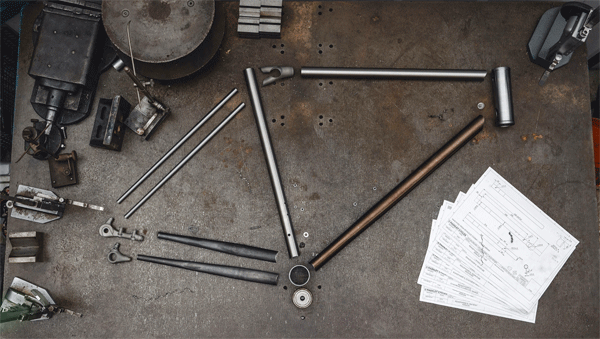
in the early 1990s, keen to demonstrate to a less-than-interested public as well as yours truly, i tentatively ordered a steel road bike frame, my first steps away from the mountain bike realm i had previously enthusiastically inhabited. islay is nowhere near as mountain bike friendly as many would seem to assume; there are many tracks leading off the main routes around the principality, but the majority were built to enable access to the peat banks when thre majority of the island's houses used the naturally occurring fuel as a source of heat. with the majority having converted to either oil or electric, and all new builds featuring the ubiquitous air-source heat pump, many of those tracks are no longer in regular use, with several now overgrown.
thus, those who desire to explore the road less travelled, aboard their state-of-the-art, downhill mountain bikes, are likely to find their ambitions cut short in more ways than one. that's not to say riding over some of these tracks isn't good fun, but you'd be fooling yourself if you imagine that's going to occupy much of the day. having learned this over a period of years, no matter where i looked, it dawned on me that, instead of riding several kilometres in search of mountains, i could simply exit the gate of my back garden, ready and able to ride for many, many enjoyable kilometres. from that point onwards, the mountain bike found itself surplus to requirements.
of course, as we all well know, there's a bit of a difference between scuttling about in the undergrowth and riding pretty much in a straight line, at higher and smoother speeds with a smile on my face. cursory investigation showed that a reynolds 531 lugged steel frame would offer a solid base on which to attach shiny aluminium componentry, offering sufficient leeway for upgrade should the road ahead prove to be the ultimate career choice. all that remained was to further impress the herbridean population by hand-building a pair of suitable wheels. thus was born my first serious road bike, specced and built by my own fair hands.
the spontaneous burst of indifference was almost palpable.
however, as we have all become aware, for the apprentice roadie, the aforementioned investigations have a tendency to continue whether required or not, revealing, in my case, the knowledge that 531 tubing had a 653 big brother. insured accidental damage to that red, 531 frameset a few years later offered the opportunity to acquire just such an upgrade, and beyond that sat desires of owning the ultimate 753, exponents of which had to be reynolds approved, offering appreciable exclusivity. admittedly an exclusivity that, in my case, was never attained.
the road less travelled now consisting of tarmac took a slight detour when i opted to outfit myself with a lugged steel and partially chromed colnago superissimo which, being italian, eschewed british tubing for that of columbus (in this case, columbus brain tubing). i will embarrassingly admit that all the professed properties of 531, 653 and brain tubing were pretty much lost on me at the time. yes, i enjoyed riding all three of the above, but in a blindfold test (not advisable on the open road), i'd have been hard-pressed to tell the difference.
marketing as science.
nowadays the majority of us are on carbon, apart from those of us who are still on steel. in the case of my ritchey, it's built from ritchey tubing, but quite how that compares to reynolds or columbus i know not. very few of us have the faintest idea as to the quality of our carbon fibre, and to be honest, few of us actually care; as long as it doesn't fall apart or dissolve in the rain, all is well with the world. for that reason, i find it hard to become enthused by the release of a new bicycle from, well pretty much anyone; i'm still enough of a luddite to believe that round, narrow, steel tubing is my state-of-the-art and all manner of new fangled frame shapes (why square?) are as disinteresting to me as my road bike career has been to islay's population. don't get me wrong, i still like bicycles, but the zing has evaporated slightly.
but the zing returned just yesterday from an entirely unexpected source; not colnago, not cervelo and not even ritchey, but pashley, by way of their new roadfinder sl reynolds 853 road bike. yes indeed, reynolds 853 tubing. and even betterer, the top of the range model is factory outfitted with campagnolo's wireless super-record for a remarkably modest £9,000 (cheaper versions are available).
the world is now a better place.
friday 4 july 2025
..........................................................................................................................................................................................................hi
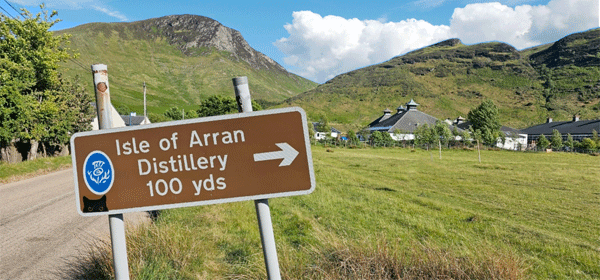
in 2018, i travelled across to the (relatively) nearby island of arran, one that is about to join islay, jura and one or two other west coast islands in yet another bout of ferry disruption. if this is something in which you think you may be interested, have a look at the bbc's news scotland website. however, in 2018, the problems were arguably less oppressive. A friend had kindly transported my drumset a few days earlier, so i was able to rely on the islay ferry and that which sails from claonaig to lochranza, the former a mere eight kilometres from kennacraig. though there was a band rehearsal on the thursday evening, it transpired that the gig itself was scheduled for saturday evening, meaning i had a day off on friday; my percussive services were not required.
the distillery had secured me accommodation in the village field centre, regularly used by school trips and those intent on climbing the hills that overshadow lochranza, a facility that also possessed several mountain bikes, one of which they were happy to lend me free of charge, on which to cycle to lagg in the south of the island. a friend of mine owned, at the time, a cyclists' café and i had been invited south for lunch, a round trip of 100km. of course, despite the generosity of the field centre in supplying the bicycle, it turned out to be barely serviceable, with notable chain-suck, intermittent gearing, and the most hateful flat bars it has been my misfortune to ride.
however, the day was hot and sunny, and the bicycle did get me safely, if a tad slowly, to lagg and back.
disappointingly, even as a famed member of the cycling media, my reputation had obviously not stretched as far as the isle of arran. i had not expected to be cycling at all when on the island, so had neglected to bring any suitable cycling apparel; thus i cycled clad in a pair of jeans, vans shoes, and a lightweight, but waterproof jacket. anonymity was mine. and while i pedalled the solitary road that encircles the island, i met several road cyclists aboard high-reputation bicycles, their dress sense indicating they either were, or thought of themselves as amongst the cognoscenti. i think i could count on the fingers of one hand the number who returned my friendly greetings.
perhaps courteous velocipedinal greetings are not inter-island transferable.
which brings me once more to my annual moan, concerning the apparent insularity of visiting cyclists, though it does give cause for celebration that this seems to be on the wane. with holiday season now upon us, this may be the earliest we have witnessed quite so many bike riders on islay's highways and byways. during a trip from bowmore to port charlotte (visiting the museum), i met an impressive number aboard bicycles, partcularly a disparate peloton of about six civilians aboard hired e-bikes. notwithstanding the observation that they were probably all less than half my age and could surely have ridden acoustic bikes, it was interesting to note that the were in three sets of pairs, with at least one hundred metres between them.
why?
however, in what i consider an ironic twist of fate, there was yours truly on arran seven years ago, aboard a hire bike, dressed in civvies, but waving to the pelotoneers who passed in the opposite direction, contrasting with the opposite state of affairs on islay. as each of the three sets of pairs passed as i left bruichladdich heading towards bridgend, i waved and offered a cheery greeting, to be met by what i can only described as indifference. over the weekend, the 'real' cyclists encountered en-route to debbie's responded to every 'hail fellow, well met, something that can definitely be viewed as an improvement over previous years.
but in retrospect, i'm wondering if this signifies a further division in categorisation? do those aboard e-bikes regard those of us on acoustic bikes as an inferior species? is it because they are to be seen riding hired e-bikes? this induces an almost irreconcilible conundrum for the sunday peloton; i think we'd all agreed that those cycling e-bikes were quite plainly the inferior species.
thursday 3 july 2025
..........................................................................................................................................................................................................sell-by-date
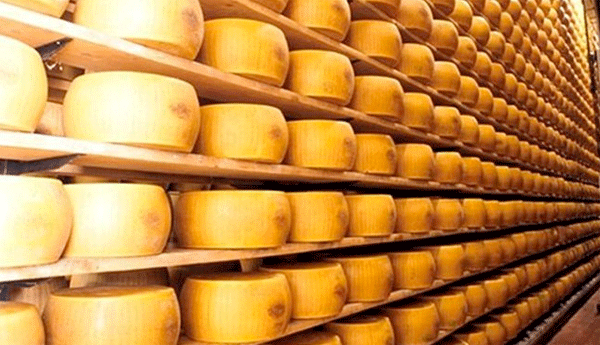
it's the inherent problem with wedges of parmigiano reggiano; where is the socially or culinary acceptable point of stoppage? the outer edge, or crust, is obviously that which has interacted with the surrounding atmosphere; its distinct rigidity would suggest it to be the part that should not succumb to the clever little tool that shaves thin slices atop one's pasta. but how close can one go without crossing that unwritten line? let's face it, shaving thin slices from a wedge of parmigiano is difficult enough at the best of times, risking the thin end of the wedge breaking off onto that pasta dish. after all, aren't we all agreed that reggiano is not a user-friendly cheese in the chewing stakes (a hypothetical action that can be easily applied to cheddar, brie and many other soft and hard cheeses).
it is an important discussion to have, i believe, because aged parmesan cheese is hardly cheap. gaining maximum benefit from a cheese wedge costing (in islay currency) in excess of £5 is hardly a lifelong quest that might come under the heading of ambition. every time i have a plate of spinach and ricotta tortelloni subsumed under a thin layer of sun-dried tomato pesto, i find myself assessing the amount of parmigiano left on the wedge and whether a purchase might prove necessary before the next serving? it's a question i have asked myself on a weekly basis for many a long year, yet i'm no closer to providing a cohesive answer than i was when the question first sprang to mind.
and it must be conclusively obvious to all and sundry that i run the serious risk of neglecting to purchase a new wedge before reaching the point of no return.
which, naturally enough, brings me onto disc brake pads. how often should they be replaced and how can you tell? my ritchey logic still adheres to the rim-brake philosophy, the pads for which impart such knowledge without reservation or concealment. those on my record calipers feature three diagonal slots, the disappearance of which would forcefully suggest a lack of paying attention on my part. disc-brake pads, on the other hand are somewhat more of a challenge. online advice would suggest that replacement pads ought to be sourced when squealing or grating noises emanate from either or both rotors, but, as i'm sure we're all aware, disc-brakes do that all the time, especially when wet.
you need only watch a professional level cyclocross race to hear the cacophony of squeals as the riders slow for a tight and sandy corner, or on one of those trepidatious descents. just remember that their bicycles sport the latest in componentry, fettled within an inch of its life by the finest of bicycle mechanics.
technical advice would also contend that checking the width of substrate acting on the rotor would provide relevant indication as to the closeness of the sell-by-date. except, unlike the ease with which pads can be replaced on rim brakes, discs are anything but user-friendly, particularly if you do not identify as a home mechanic. imagine the cost and embarrassment of leaving the bicycle in at the shop, only to be told "there's still plenty of wear left, mate." on collection.
in the absence of a bike shop, there are probably more cyclists in the hebrides with at least rudimentary mechanical abilities than a similar peloton sample from scotland's central belt. but that's the nature of self-sufficiency which doesn't necessarily translate into simplicity of any description. the first and most obvious hurdle is identifying just which of the hundreds of different pads available, are the very ones for those on the favourite bicycle in the bikeshed. as i write this, i can easily observe a full set of manufacturer's branded, organic disc pads for the sram rival disc calipers that feature on my specialized crux. except, i didn't buy them. one of my fellow sunday morning pelotoneers ordered them for his specialized diverge on the recommendation of one of the internet's premier bike stores.
he was fortunate that they acknowledged their mistake, and sent a corrected order, without asking that he return the others. which is why i have them. the minor downside is that i had replaced my own pads only a week previously. and just to undermine advice highlighted above, his brakes have always squealed.
there then follows the need to remove the tiny allen retaining bolt, and safely store the retaining clip, always assuming you didn't lose it during the opening part of the replacement process. removing the pads is relatively simple, but attempting to press the pistons back into their recesses could try the patience of a zen master. and assuming all goes according to plan, including replacing the retaining bolt, either the new pads will prove insufficiently far apart to allow the rotor to spin, or you'll have to endure hours of minute adjustment attempting to stop the pads intermittently rubbing on the rotors.
that leaves only one remaining question: why do we need disc-brakes on a bicycle?
wednesday 2 july 2025
..........................................................................................................................................................................................................scott mitchell's britpack
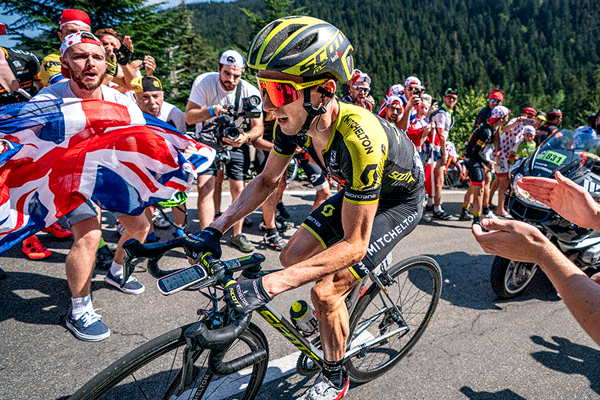
britain's competitive cycling clout seems not to have greatly diminished within the professional peloton. in fact, taking all into consideration, the number of brits riding the world tour could arguably and confidently have said to have increased. both ineos and ef education easypost sport six british riders each, while yellow jersey contender, jonas vingegaard's visma lease-a-bike team has one less at five. there are four uk riders at picnic-post nl and three at tadej's uae team emirates. yet, as we have all heard over and over, 2025 will see the last free-to-air broadcast of the tour de france on british television. though it's probably none too easy to confirm, despite my repeated disparagement of tnt sports, they might only be the bad guys because of their dramatic increase in the cost of a monthly subscription.

though they have wrapped up exclusive rights to the tour and every other cycle race for the next five years, itv apparently relinquished their rights without so much as a murmur.
obviously enough, the reputed 34 riders performing at professional level are not all in a position to challenge for a coveted jersey in any of the three grand tours, but so far, the one (pink) jersey on offer this season has already succumbed to a british victory. that leads to two, or possibly three immediate questions: why then has the number of races in the uk diminished to such a notable degree in recent years? accepting the latter to be the case, how have those 34 riders reached such a high standard without access to a full race programme on this side of the channel? and will britannia ever rule the peloton again?

however, it isn't just one-time british cycling superiority that has diminished, current numbers notwithstanding. when prince bradley was acquiring both yellow and gold, britain was home to several quality cycle-sport publications, the first of which to evaporate into thin air was, ironically, cycle sport magazine in 2016, followed by procycling six years later. and subjectively, rouleur, originating in perren street's imperial works in 2006 has lost much of its original lustre, underlined by the stunning photography that once graced many of its pages, along with writing of a similar standard.

granted, the uk was not the only country to curtail its quality cycling publications (peloton springs to mind; yet another magazine to feature the best of cycling photography), but it seems that rouleur became part of the perennial trend of britain selling its manufacturing/publishing genius to foreign acquisitors. the current owner of rouleur is an italian former banker also responsible for passoni bicycles. you would not be alone in wondering from whence comes this particular trait, while lamenting its commonality. until the arising of rouleur, blissfully unaware of what could be achieved, i would not have categorised photography as an art; but art it certainly can be.

and throughout the period in which the bradley bubble could be seen to thrive, once edinburgh-based, but now a cambridge resident, photographer, scott mitchell, was our window into the britpack, nested as he once was, as team sky's official photographer. framed and on the wall of debbie's in bruichladdich, courtesy of scott, hangs an acutely observed portrait of bradley wiggins when he was considerably skinnier and clean-shaven than he is today. with both brad and scott being die-hard mods, the commonality allowed mr mitchell to capture images of britain's first yellow jersey winner, along with chris froome, mark cavendish and geraint thomas. his eventual release from the strictures of corporate team sky photography, subsequently allowed him to point his expert lens elsewhere to include adam yates and steve cummings. those were the halcyon days of yore and despite the passage of time, still worthy of our approbation, particularly if you happen to believe it to be an age unlikely to be repeated in the foreseeable future.

scott told me about this octet of images, "Adam Yates climbing; I think we dipped into Spain that day. I remember singing with the Catalonians 'Free Catalonia'
"G with his famous number 8. I was always intrigued by how the rider's identity is reduced to a digit for three weeks. That's why I said to Bradley at the start in 2012 that 101 was a gift! Not sure if you noticed, but when Cav got yellow years later, he was 101 too."
"Three jerseys; in 2012 I only took one of them together, which shows how green I was back then. Tension was already there."
"Black and white version: first time of that G shot on the Alpe"
"Froomey climbing, but I can't remember this one."
"Cav in green on the Dimension Data bus. He'd just finished second in the sprint. I guess everyone was giving a bit of space but obviously not me."
"Stevo in that favourite jersey post stage. That was a mental hot year that one, as shown by his sunburn."
The last one is probably the one which resonates the most. After winning his first ever yellow, doing the podium and press then thanking all the staff and team-mates, Brad sits alone in his room (apart from my camera), with his precious jersey."

available from today are the eight images shown here, available in several sizes, printed on art archival paper and signed by scott. these range from a2 (£225 each), a3+ (£185 each) or a4 (£65). alternatively, you can choose any six on a4 for £240. go on, surround yourself with a peloton in advance of the last itv coverage of le tour de france contact modcyclingprint@gmail.com
all images copyright scott mitchell

tuesday 1 july 2025
..........................................................................................................................................................................................................