
..........................................................................................................................................................................................................
nostalgia is so last century
for no particular reason, when i awoke briefly on saturday morning, a recollection of the pasadena roof orchestra flitted into my still less than fully awake head. no doubt, were i to engage the services of a therapist, after several expensive years of monthly visits, they would be able to tell me why such an apparently random thought had occured at 03:35 on a saturday morning. but for now, i'll have to simply live with the fact that it actually happened.
oddly enough, the above mentioned musical group hails not from pasadena, california (the geographical setting for the big bang theory tv series), but from england, where it originated as long ago as 1969. the orchestra was formed by double-bass and sousaphone player, john arthy, following his takeover of the creole dance orchestra. their repertoire is gleaned from the music of the 1920s and 1930s, which may give a clue as to why the name resurfaced during a moment of personal enlightenment in the dark. i believe i may have mentioned my having purchased (at great expense), a brand new, slingerland radio king 'gene krupa' snare drum, replete with its nickel-plated brass hoops and calfskin head. krupa was a member of benny goodman's 1938 big band, the music of which has been a common factor in my daily playlist, as i try to absorb some of the great man's technique and adapt as my own.
whatever you do, however, keep that a secret from the rest of the band in which i currently play; they simply wouldn't understand.
i'm not entirely sure whether i'd agree that interest in swing era music of the 1930s and 40s counts as nostalgia, particularly if i heed the words of contemporary saxophone player, branford marsalis. he contends that much of modern jazz is overly concerned with harmony and dissonance; all very well to impress other musicians, but the great unwashed are more likely attracted to melody. according to mr marsalis, it makes perfect sense to look back to a time when music was less concerned with being an art form, and more content to be happy and entertaining. marsalis was keen to underline, however, that he was not suggesting we all attempt to form bands playing 1930s music, but simply to adapt their philosophy (if that isn't too intellectual a description) to the modern idiom.
i admit that it's a bit of a stretch, but i'm going to suggest that a similar notion be applied to velocipedinal matters. and to consolidate that thought, i have been perusing steve snowling's 1993 new edition of bicycle mechanics in workshop and competition, an updated version of the original 1986 edition.
obviously enough, modern day bicycles are still recognisable as the same species as those portrayed in this well-illustrated volume, but probably solely due to the uci mandating adherence to the archetypal double-diamond frameset, no matter the material from which it is fashioned. and a concomitant restriction to 700c wheels for road-racing, in comparison to the plethora of sizes available to the offroad fraternity. these were the days in which i learned the craft of bicycle maintenance, and where it often seemed that as much approbation was pointed in the direction of the tools, as toward the bicycles and their componentry.
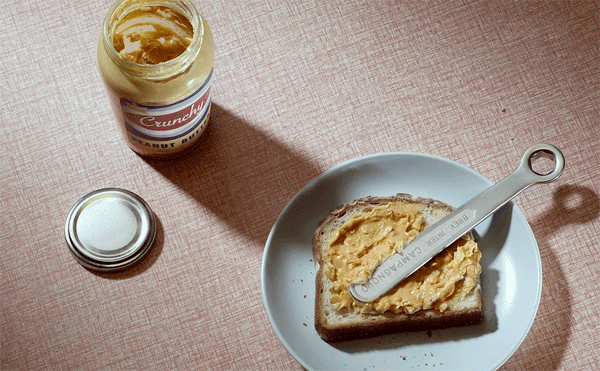
the majority of trinketry illustrated in mr snowling's excellent book is of the shiny variety sourced from vicenza. and there, on page twelve, is an illustration of the much-sought-after campagnolo toolset, few, if any of its contents, have remained relevant to today's bicycles, with their oversized aero carbon tubes and thru-axle dropouts. nonetheless, i, and many others, would happily have such a boxed set in our possession, even if only to open every now and again, and sigh. (as it happens only a few centimetres from where this is being typed, is an original, campagnolo 15mm peanut butter crank spanner, so named because at the end of a long day, many a race mechanic would use its flat handle to spread peanut butter on a sandwich for much-needed sustenance - modern-day cranksets have rendered it obsolete.)
however, i will admit to waves of nostalgia on reading the chapter on the servicing of bottom brackets. though cassette bottom brackets are illustrated, it's the process of squirting grease into the bottom bracket cups, prior to filling them with individual, quarter-inch bearings that brought back waves of happy memories, having also done likewise at the end of the season with wheel hubs. when i carried out servicing for bowmore post office bike hire, whose bikes would undoubtedly have suffered many days being ridden along the beach at the big strand, it was necessary to replace all the wheel bearings, after cleaning out the hub cups and refilling with lithium grease.
nowadays, when a smidgeon of play appears in modern wheelsets, it's often a case of hammering out three or four sets of cartridge bearings before reinstalling new (and considerably more expensive) sets with a bearing press. no doubt there are bike shop and race mechanics who do not have the luxury of considering such jobs to be therapeutic and meditative, often thankful for the easy replacement of many modern components. however, i can't help thinking that the present-day habit of contorting the carbon steerer into less than straight or round forms in order to squeeze all the cables/hoses inside the headtube, is akin to the tail wagging the dog.
i have always advised my drumset pupils to do precisely what i was advised as a beginner; whoever your current drum hero is, find out who influenced them and what music they played. ultimately, this makes for a more well-rounded musician. similarly, however much or little you know about the mechanics of your bicycle, grab hold of something like steve snowling's bicycle mechanics book to learn what was there before the cassette freehub, the a-headset, the thru-axle, the electronic derailleur and integrated shift levers. it won't make you faster, it won't make you a better bike handler, but it will provide a better perspective on the sport with which you have become fascinated, and it might help distinguish between innovation and marketing.
image: rapha's first print advert in rouleur magazine.
eternal thanks to john cunningham for sending a copy of steve snowling's bicycle mechanics in workshop and competition. much apprerciated
sunday 3 august 2026
 ..........................................................................................................................................................................................................
it's only an excuse
an editor with whom i worked about twenty-five years ago, now sadly departed, owned a farm on the outskirts of port ellen village. on frequent occasions, he would telephone the office to explain various reasons for his impending tardiness. one of the cows would have become stuck in the far corner of one of his fields, and require assistance to bring it back into the herd. however, it transpired that the quad-bike, required for this operation, was stuck beind the tractor which had a puncture in one of the front tyres. this would require at least temporary repair in order to move it out the way and gain access to the quad bike and subsequently allow him to get to the cow.
but he expected to be in the office by lunchtime.
so frequent did these long-winded excuses become, that we seriously questioned whether all farmers who joined the national farmers union of scotland were provided with a book of excuses along with their annual membership card, for i do not recall ever hearing the same story twice, indicating it to be quite a substantial volume.
i will voluntarily acquiesce to accusations of being similarly long-winded, but in this particular instance i believe brevity may be the order of the day. so it well behoves me to inform you, that my six year-old grand-daughter stayed at the croft overnight. i'm sure i don't have to elaborate any further?
saturday 1 august 2026
..........................................................................................................................................................................................................thwarted

i have frequently heard it said and written recently that, "it all comes down to money", an economic statement that could undoubtedly be apportioned to almost any strain of contemporary life. a news report on thursday indicated that, as a result of the america - iran contretemps, shell petroleum had effectively doubled its three monthly profit to a shade under ten billion dollars, which surely beggars the question as to why it was found necessary to increase pump prices, as the base price of brent crude increased over recent months. i daresay we'd all welcome the opportunity of an increased income, but that extra five billion could surely have been applied as a discount against increased prices? but, as we have already learned, "it all comes down to money".
the same accusation could be repeatedly aimed at shareholders the world over. as wildfires destroy tracts of land all across the world, almost certainly as a result of climate change, energy and fossil fuel companies, car manufacturers, and airlines, to name the first few that come to mind, continue to lobby government to water down, cancel and postpone various negotiated and imposed restrictions that might keep global temperatures below the oft-quoted 1.5 degrees. this has far less to do with any suspicions that climate change might be the hoax that president trump reputedly believes it to be, but more to do with retaining the ability to pay increased dividends to shareholders. i'd imagine that those with money in shell are currently rubbing their hands with glee (unless they live adjacent to a current wildfire).
however, my mission in this monologue has little to do with the controversial subject of global warming, but definitely the acquisition of currency at the expense of others. yes, we've returned to the thorny problem of tnt sports controversial pricing of pay-to-view cycling. in truth, that may be selectively overstating the situation; the monthly subscription to the exclusive rights holder for live coverage of cycle sport is currently set at £30.99, for which the subscriber is offered access to premier league football, uefa champions league, uefa europa league, uefa conference league, premiership rugby, motogp, cricket, ufc and boxing, amongst others.
one of those others is cycling.
the glaringly obvious reason for such a high price of admission is shown in the first four items from that list. tnt sports has spent so much money on acquiring the rights to so much live soccer, that recouping as much as possible has resulted in even those who have little or no interest in football, being charged as if they actually did. at the risk of repeating myself to the point of boredom, the only live cycling with which i'm obsessed, is cyclocross, and the only broadcaster who provides access to h2o badkamers, exact, super prestige and world cup trophies is, you've guessed it, tnt sports.
technically, i am informed that it would be easily possible for tnt sports to subdivide the subscription fee into separate packages; thus, while it may not make economic sense to charge me a fiver a month to watch only cyclocross, it would be simplicity itself to confine my viewing access solely to cycle sport, thus removing any obligation on cycling (or cricket, or motorcycling, or boxing) fans to subsidise those who will watch any soccer game anywhere at anytime (my son-in-law springs to mind). but in essence, why would the tnt corporation want to do that when they can make far greater profits by positioning everything on a one-size-fits-all basis?
in 2025, cycling weekly conducted a survey which revealed that, from a polled sample of 1273 individuals, 1,120 said they would not be subscribing to tnt sports to watch live coverage of the tour de france in 2026. none of this is intended as a criticism of the quality and quantity of live cycling coverage provided by the channel, but under the banner of eurosport, it provided exactly the same quality and quantity with the very same commentary crew for a mere £6.99 each month. make no mistake; if you subscribe, you're subsidising the football fans.
however, it seems we all have our price. despite the uk partnership between tnt sports and channel five to provide a daily highlights programme, the sports broadcaster reported a 58% increase, year-on-year, in subscriptions. i cannot pretend to be a wholly innocent bystander; i too capitulated in october last year, ponying up for a monthly subscription to tnt sports in order to watch live and on-demand cyclocross, despite having mentioned in pixels that was something i would hope to avoid doing.
in a vague attempt at justification, tnt insists that it "invests in sport", but like the majority of investors, it does so to provide dividends for its own investors. can anyone recall having seen anything during this year's tour, that may have appeared as a result of money from tnt sports? nope, me neither. yet the full quote, from warner brothers/discovery sports europe (tnt's parent company) executive vice president, scott young, stated "companies like us and sky invest in sport, and that's why sports like the [football] premier league have been going since day one behind a paywall." in the case of soccer, that might well be true, since it's the eye-watering amounts of tv money that provides premier league footballers with their obscenely large salaries. but currently, money from tv coverage of the tour only enriches the amaury sports organisation (aso) owners of a great many annual cycle races.
as we have already agreed, whichever way you look at it, "it all comes down to money".
friday 31 july 2026
..........................................................................................................................................................................................................the perpetual dilemma
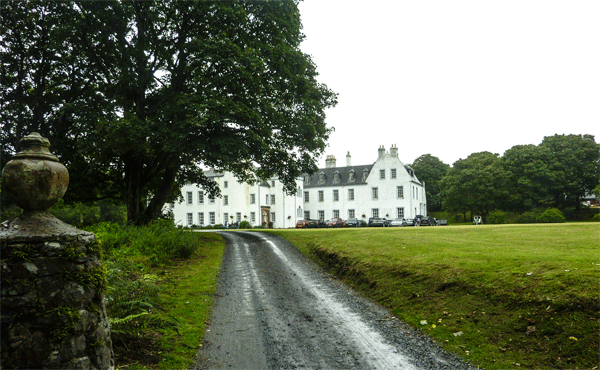
islay house was originally referred to as kilarrow house, confusingly also the name of a large stone house on the outskirts of bowmore, the latter still owned, though unoccupied, by argyll & bute council. kilarrow was the community that preceded the present day village of bridgend. it's the nearest contemporary settlement to islay house, the extensive grounds of which, when still regarded as part of the estate, effectively surround the village. islay house was originally built for sir hugh campbell of cawdor in 1677, but subsequently sold, along with islay and jura, to daniel campbell of shawfield in 1726, when sir hugh fell upon hard times.
since then, it has been in receipt of several upgrades, adding in two spiral staircases in 1760, one at each end of the largest part which overlooks loch indaal. it was at this time that it lost the kilarrow moniker and became islay house, the name by which it is still known today.
when i arrived on islay, it was already two years into ownership by former military and airline pilot, tom friedrich. he had invented a method of quieting jet engines, an invention he was prevented from benefitting by the commercial aspirations of the world's jet engine manufacturers, keener to sell the airlines their latest high by-pass engines, than retro-fit the existing models. tom was a tall, friendly chap with islay's best interests at heart, happy to allow classical and jazz concerts in the impressive, if largely dilapidated building. he sold up in 2014 to a pair of investment bankers who harboured plans to turn the place into a luxury hotel, an aspiration which never quite came to fruition, though seven of the rooms were pleasantly refurbished, despite severe planning restrictions imposed by historic scotland.
after ten years of never quite getting it right, during which the community garden, set up in the mansion's former walled garden, was sadly undermined by the owners' contractual demands, islay house was once again sold, this time to the californian-based payne-clark family, reputedly descended from the former head-gamekeeper at islay house. keen to keep the local community abreast of his plans for this historic building, new owner, mike clark, invited all and sundry to visit on tuesday past, where we were to be presented with the optimistic future of islay house as a luxury, yet homely hotel, a process that is likely to take several years, given the sloth-like speed of the council's planning department.
keen to visit on tuesday afternoon, principally as a precursor to an article appraising readers of the local newspaper of that which i learned during my tour, i extracted the 'cross bike from thewashingmachinepost bike shed and made ready for the five kilometre ride to bridgend. nothing could appear more simple, but as you might expect, straighforwardness was never going to be a major factor in the available options. for starters, not only had it started raining just prior to the grand départ, but was forecast to continue doing so for the remainder of the afternoon and into the evening.
should i clothe myself in suitable cycling apparel for the occasion, taking care to obscure any signs of lycra, or remain true to my contention that cycling need not necessitate specific clothing for what was likely a commute far shorter than the velocipedinal average? as matters transpired, i opted for bibshorts under a pair of showers pass baggy shorts, matched with a merino wool jersey that only advertised its cycling heritage via the subtlety of its three rear pockets. under the circumstances, you might be asking why i took that particular choice, rather than remaining a civilian in civilian's clothing?
while the hebrides are hardly bending under the oppression of a heatwave, it is july, during which i felt even my meagre pedalling efforts would generate sufficient heat to make the wearing of denim jeans a poor choice. secondly, the only waterproof jacket i currently possess, features a thermal liner, rendering it potentially too hot for the prospective ride. on the other hand, as demonstrated above, shorts would ameliorate any localised leg-heat, and i own more than just a single breathable waterproof that would augment the shorts in ginger peachy fashion.
but if we ignore the specifics of my short return trip, bearing in mind any sartorial considerations relevant to the end purpose of the ride, is there likely a demaraction between those of us who oft consider ourselves as refugees from the peloton, and those whose perception of cycling errs considerably more on the transportational side? in my case, and possibly that of many of those currently reading, i have choice; options ripe for a comparison that has been part of my life for as long as i recall. committed commuters, who often have little need for the bicycle outside of its convenient mobility, who regard it as a tool and a means to an end, rather than our less defensible end in and of itself, will simply wear what is convenient, based predominantly on experience and pragmatism.
the rhetorical question that i have yet to ask directly is, should i have erred more on the side of normality, if only to portray to my fellow visitors at islay house, that the bicycle was every bit as logical a transportational choice as they believed the car had been (the car park was all but overflowing when i arrived)? under the visitational circumstances described above, it seems very likely that fellow visitors would infer that, if my proselytising on behalf of the bicycle meant having to acquire and wear specialist clothing, then my hopeful message had been shot down before it had time for a test flight.
does this mean that i am needlessly suffering for my art?
thursday 30 july 2026
..........................................................................................................................................................................................................the cycling addiction. suffering, speed and the search for meaning on two wheels. phil cavell bloomsbury sport paperback. 320pp illus. £18.99
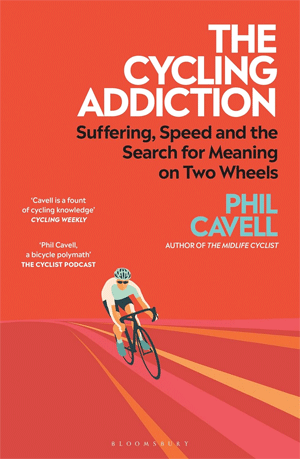
"Hi, my name is Phil. And I am a cycling addict."
phil cavell is one half of the owners of london's cyclefit where i was once invited to undergo a bespoke bike fit in order to prepare an article for thewashingmachinepost. the outcome of that particular bikefit was eye-opening, to put it mildly. my saddle height, in particular, was based almost entirely on the trend of the day to ride with your posterior in the air, while my teeth almost crunched the stem. in hindsight, those contortions were akin to recalling the flares i used to wear as a teenager. according to mr cavell's detailed notes, i had spent a large part of my career to that point, riding with my saddle almost four centimetres higher than the bikefit recommended. convinced that there must be some mistake - a few millimetres would not have seemed inordinate, but four centimetres? - i set the saddle to mr cavell's designation and i have ridden in (relative) comfort ever since.
which is a very long-winded way of saying, i have every faith in phil's velocipedinal ministrations on our behalf.
his previous foray into print - the midlife cyclist - examined the available opportunities for those over fifty to continue training hard, riding fast, while remaining healthy. this time, as the book's subtitle suggests, the author takes a closer look at why we desire speed on our bicycles and the often uncomfortable hoops we're willing to jump through in order to get there. in other words, why are some individuals more drawn to pain and suffering than others? encapsulated in the first paragraph of the introduction, "racing bicycles has never been about avoiding pain, merely weighing it." it's not necessarily that we're attracted to the pain and suffering, but many are willing to accept it, providing they appear to be dishing out greater amounts of it to those against whom they race. as a principal focus maintained as a background to the book's philosophy, mr cavell cites possibly one of the sport's most iconic novels, the rider, by tim krabbe.
at this particular point, might i suggest that, if you haven't already experienced the rider, that you acquire a copy along with the cycling addiction. you won't regret it.
and to be almost perfectly on topic, for those who witnessed tadej pogacar winning atop alpe d'huez, in the process, reducing a three minute gap to nothing in a matter of very steep, uphill kilometres, one can only imagine the pain and suffering endured not only to achieve that stage win, but the amount he must have endured in training to be able to put on such a dominant display in the first place. that goes every bit as much for those who were left flailing in his wake.
why?
cavell uses the witnesses of robert millar, adrian timmis ("frighteningly normal on the outside but other-worldly on the inside.") the latter description of which could be applied to many, if not all of us, whose first reaction to a crash would always be "is the bike ok?". phil cavell asks many of the questions that some of us have already asked, but in a far more organised and logical fashion. others may be still to reach that point. "Why am I like this? Where does my compulsion to ride come from?" if those are questions you'd prefer not to ask at present, the author has dedicated this book to doing so, in order that you don't have to. and first on the list is an examination of what he has entitled 'project pain', elucidating that its origins lie in millennia past, when its purpose was to protect animals - and, by implication, us - from injury or death. he concludes that, despite its aim to keep us safe from ourselves, certain lycra wearing animals seek, venerate and trade it as if it were a commodity to be embraced.
to understand this in greater detail, the author introduces us to 'the thing', otherwise known as the cyclist's brain. it is arguably this 'thing' that has given rise to a cycling genotype, the origin of which, cavell dates accurately to 1869 "...the world's first recorded bicycle road race from Paris to Rouen." i cannot deny that i skipped through most of the chapter on the brain, finding it uncomfortable to use the very organ i was reading about, to comprehend that which mr cavell was (metaphorically) disseminating.
but that's just me. i can't watch those medical programmes on tv either.
deliberately (i believe), phil uses the example of the match-burning frank vandenbroucke to describe what can go wrong when skill and ambition don't quite match up with appropriate human perspective. vandenbroucke had, as his biographer andy mcgrath wrote in 'god is dead', "lived his life without a parachute".
it would be a spurious endeavour for this reviewer to recount all the impressive research, awareness, intellect and skill that the author has invested in a detailed and occasionally controversial examination of why it is that we do what we do, irrespective of how well we actually do it. the narrative provides a clear, concise explanation of what would otherwise be complex and often obscure concepts and the terminology adopted to describe them. reading all 300 plus pages might not transform you into krabbe's rider, nor indeed, robert millar or adrian timmis, but that's hardly the real point. it might take a couple of read throughs to acquire a true picture of what keeps persuading me to occasionally overstretch myself on the sunday ride, but if nothing else, it should give me a convincing answer for the fellow in debbie's who keeps asking me why on earth i slog myself silly into horizontal rain and galeforce winds.
it'll work for you too. superb is scarcely an adequate description.
thanks to the generosity of bloomsbury sport, i have one copy of 'cycling addiction' to send to the winner of this simple competition. what was the title of phil cavell's previous book? send answers, along with a full postal address, to brian@twmp.net closing date is monday 3 august.
wednesday 29 july 2026
..........................................................................................................................................................................................................not even close
i was very late to the party on this account, but despite having taken charge of islay's local community newspaper well over six years past (at the beginning of the covid pandemic), it only ocurred to me around one year past, to make daily checks on the bbc website for nuggets of scottish and national news which might prove valuable for follow-up. that i have found sources for a few more localised stories came as somewhat of a surprise, always having regarded the bbc website as too wide-ranging to be peculiarly relevant.
however, in the years when there was practically nothing happening locally, features on the site occasionally inspired ideas that could be particularly relevant to the largest island in the southern hebrides. that is still the case today, though simply confirming my fears brought about by an increasingly online world, that there are a myriad of rabbit holes down which i ultimately travel. and even though the light at the end rarely has any justifiable relevance to the case in hand. then, of course, there are the times when i'm really just kicking-off, not really concentrating on work, but browsing nonetheless.
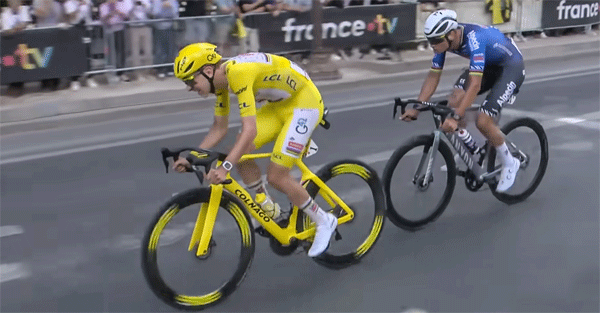
that may have been the case on monday past. while checking on stories from central and western scotland, i happened upon a feature highlighting the winning of three gold medals by scotland at the curtailed version of the 2026 commonwealth games, currently taking place in glasgow. clicking the specific link whirled me off to the so-called sports pages, and while i was there, it seemed almost rude not to access reports of the past three weeks in france, including mathieu van der poel's unexpected sprint victory on the champs elysées as the finalé to tadej's successful campaign to join the ranks of the tour's five-time winners.
the fly in that particular ointment turned out to be not one single mention of the 2026 tour de france in the sports section of the bbc website.
there was the expected over-reporting of the weekend's football matches, more than anyone really needs to know about why lewis hamilton spends so much time blaming his car provider rather than his own inability to bring home the victories. obviously enough,the commonwealth games were well-served, as was golf, cricket, boxing, horse-racing, darts (a hobby, not a sport), and even rugby. but, at the time, not so much as a sniff of cycling, despite the strenuous efforts of the peloton over the course of three weeks and several thousand kilometres of riding and ascending (at the time of writing, an article confirming the health of professional cycling had made a late appearance, featuring the quote "one of the hardest events in elite sport.")
it could be as a result of tnt sports having monopolised live and on demand coverage of cycling on britain's television sets; it's probably too soon to tell for sure, though the welcome, last-minute appearance of daily highlights on channel five (provided by tnt sports) was largely welcomed with open arms. it would be a somewhat redundant argument to posit that three weeks of professional cycling is surely more newsworthy than chelsea football club considering a substantial payment to acquire a player currently with brighton and hove albion, though i'd be willing to give it a try.
should you find it necessary to helpfully point out that i might be just a tad prejudiced in such matters, i'd find myself in no position to argue; i most certainly am. but observed from a hypothetically neutral point of view, surely three weeks of "one of the hardest events in elite sport", resulting in one of today's finest protagonists joining the five-time-winners' club, ought to take precedence over the potential transfer of a 35 year-old footballer from one team to another. that latter story sits under the heading of administration rather than sport.
though the cycling feature that arrived on the bbc site very last minute was entitled 'cycling in rude health', the end of british eurosport, and the imposition of an alarming monthly price tag should you wish to watch "one of the hardest events in elite sport" have arguably set in motion a decline in the british side of the sport. during the bradley bubble that appeared after the london olympics of 2012 and wiggins' subsequent tour de france yellow jersey, it seemed that cycle sport was set to join the big hitters, with british-based teams and races on the up, and dramatically increasing memberships of british cycling and cycling uk. granted, monday's guardian newspaper provided as many column inches to le tour as it did to the hungarian grand prix, for which it should probably be applauded, even if reporting on the world's major sporting endeavours is an endemic part of quality sports reporting.
disappointingly, it appears that bbc sport may have lost sight of the quality aspect. but it does engender the oft-repeated question, 'what do we have to do?' to ensure that the pinnacle of the sport is regularly placed in front of britain's young sporting aspirants, offering yet another cogent source for an admirable sporting career at best, or uncontested health and physical benefits at the very least. optimism is always the preferred default, but i have a sneaking suspicion that this is a subject i will be repeating in a year's time.
tuesday 28 july 2026
..........................................................................................................................................................................................................